


Middle East Watch: US dollar vs. Bitcoin - which is the ultimate safe haven?

Since Feb 27th, cryptos have outperformed US dollar, gold, other traditional safe havens; but cryptos' "safe haven" credentials still in doubt
Although Brent Oil has soared to its highest prices since July 2024, geopolitical risk premiums can be swiftly unwound
US dollar expected to retain status as the premier safe haven asset, as deemed by mainstream markets, as long as Middle East conflict rages on
US dollar supported by risk aversion, America's energy independence, and prospects of fewer Fed rate cuts in 2026
Still, dollar's downside risks may return to the fore if markets deem war risks are digestable and contained
----------
Attacks between the US, Israel, and Iran continue spilling over into the broader region for a fourth day, which in turn are ramping up risks to the global economy.
Major assets across global financial markets are duly taking note of such risks:
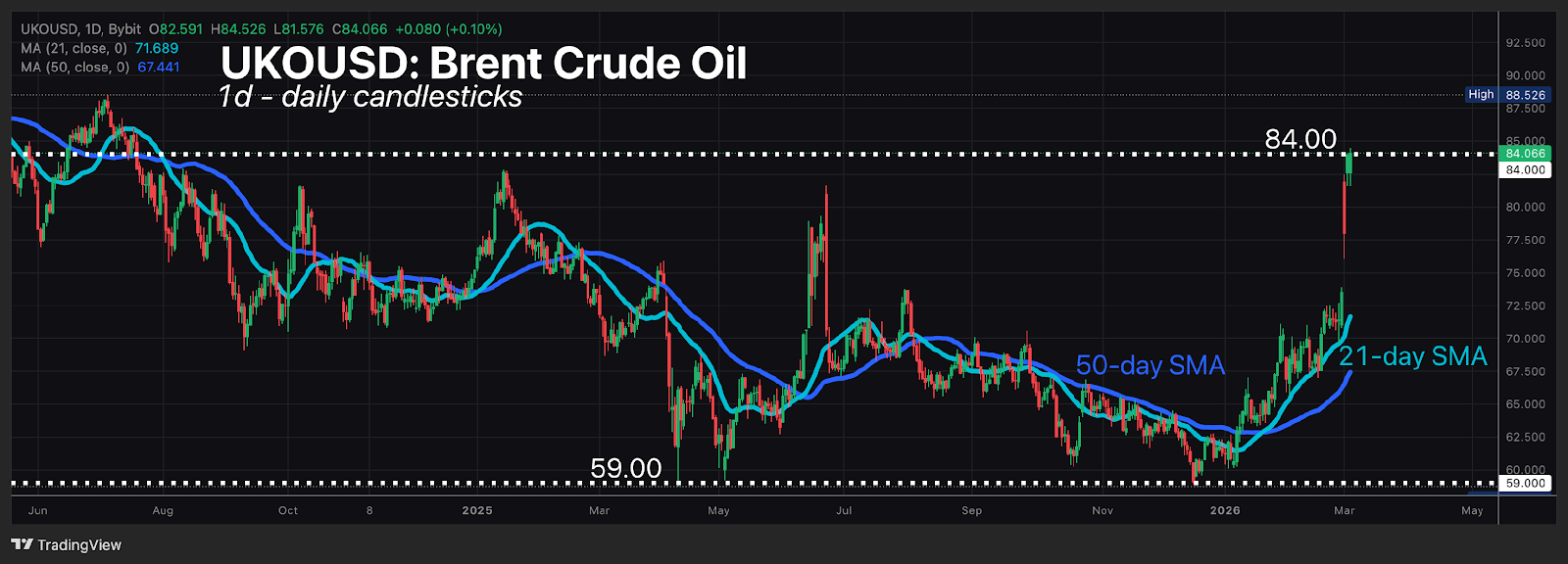
Brent Oil (Bybit: UKOUSD) is trading around $84/bbl at the time of writing - its highest prices since July 2024, having just posted its biggest 2-day gain since 2020.
READ MORE: How high could Brent Oil go?
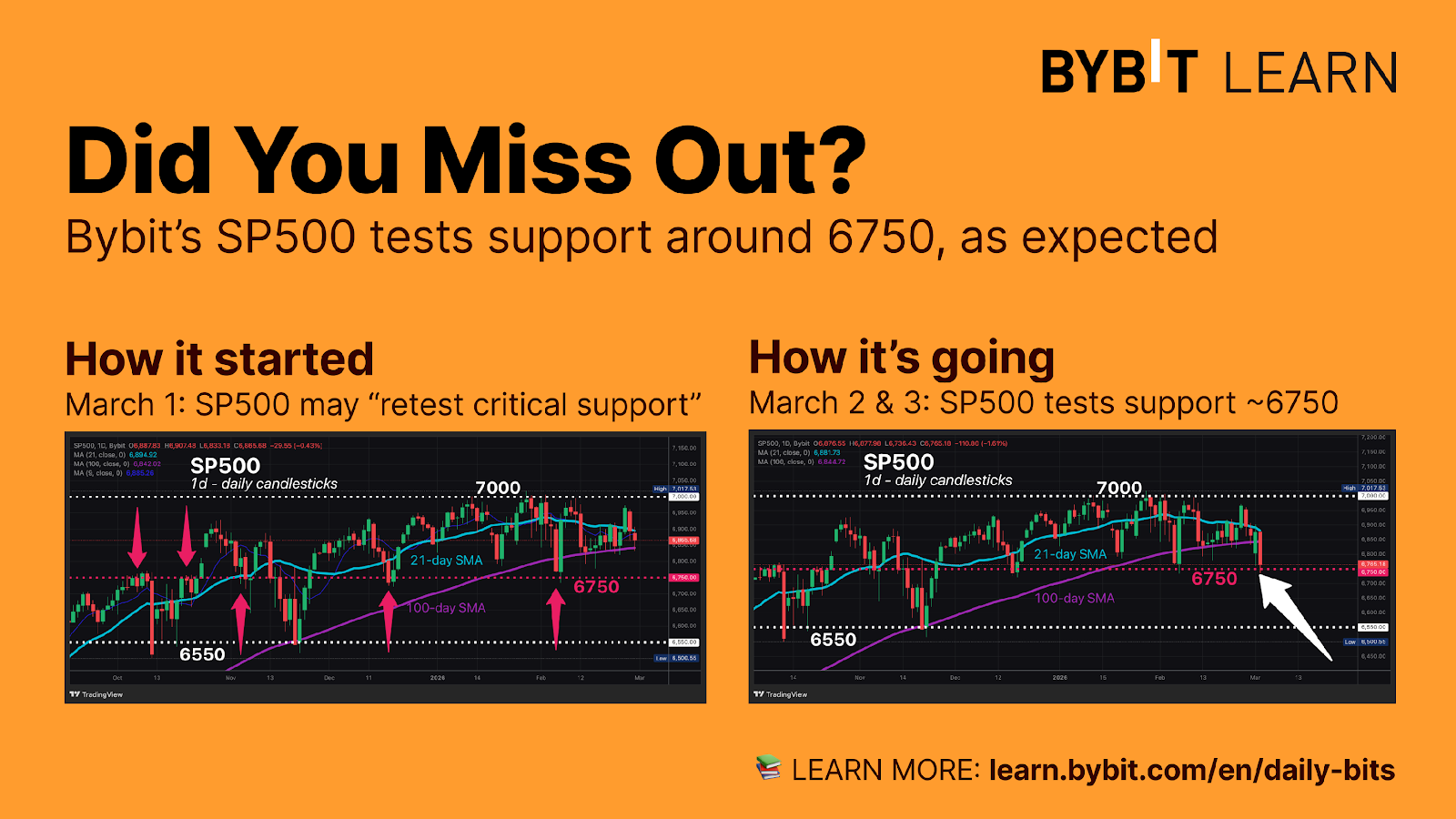
Bybit's SP500 is trading around 6,800 at the time of writing, though in each of the past two days (March 2-3) has rebounded off the 6,750 zone - a "critical support" region we highlighted since Sunday, March 1st.
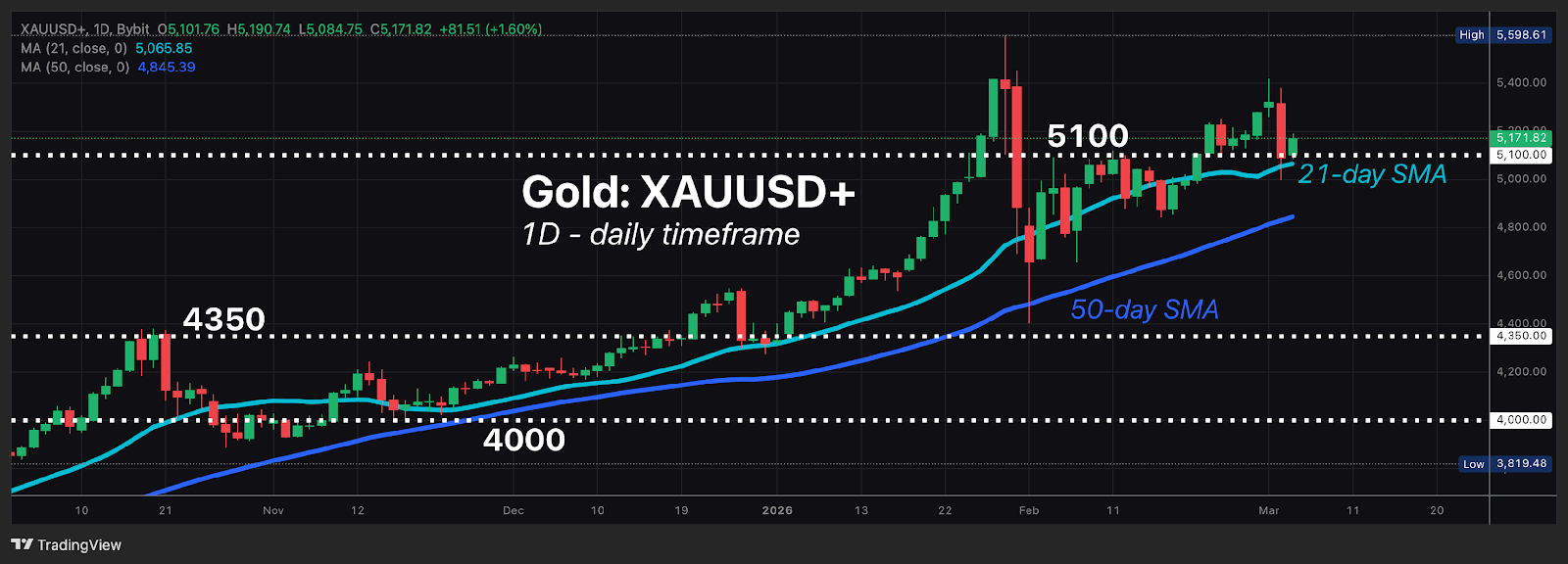
Safe haven Gold is back above $5100, following a surprise tumble yesterday (Tue, March 3) due to the US dollar's surge.
NOTE: Gold tends to move in the opposite direction (inverse relationship) as the US dollar; when USD strengthens, XAUUSD+ tends to go down, and vice versa.
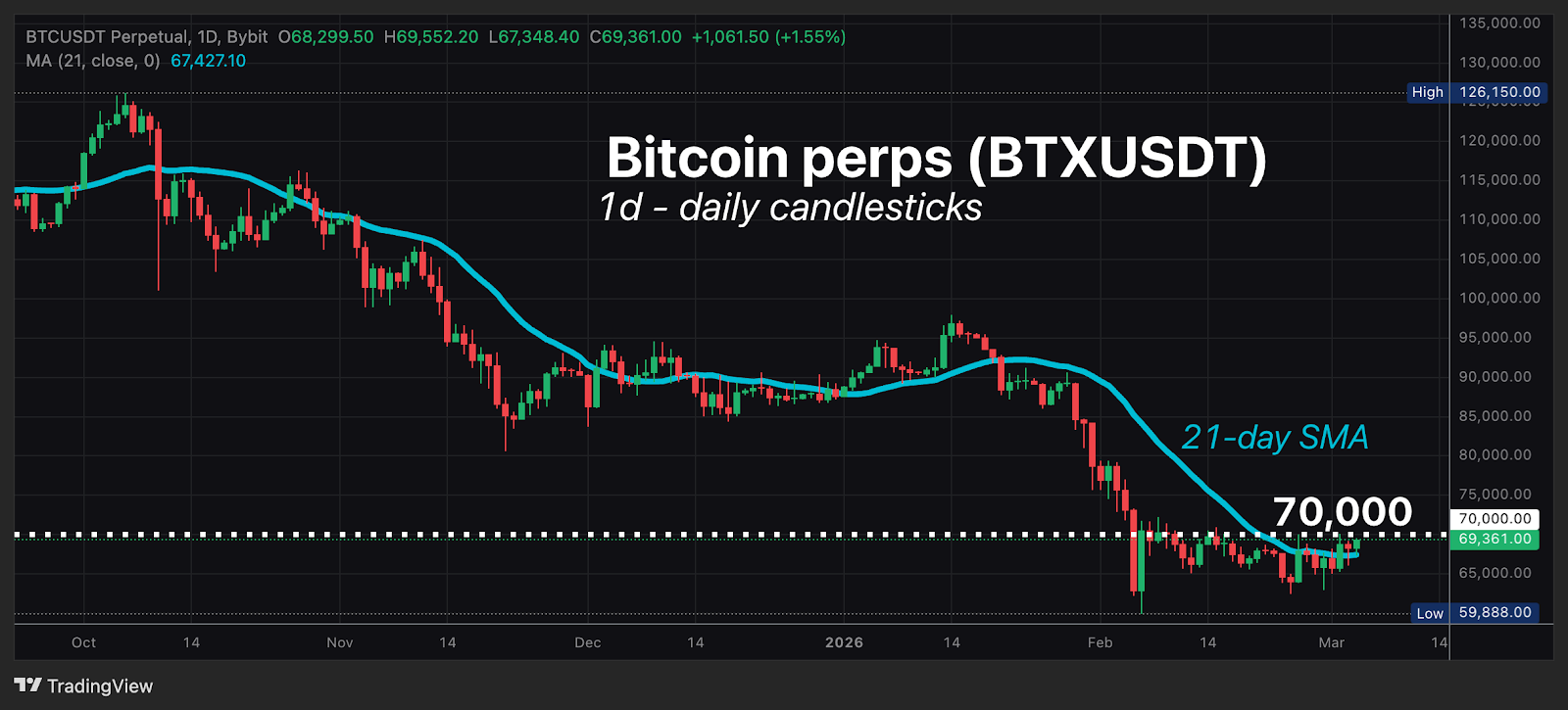
Yet, cryptos are once again defying risk-off sentiment.
Bitcoin (BTCUSDT) is going up yet again, finding support at its 21-day simple moving average (SMA) to re-test the $70,000 psychological resistance once more.
How have major assets fared since Middle East attacks began?
As the regional attacks enter their fourth day, global markets have witnessed a dramatic flight to safety.
Yet, the ongoing Middle East conflict has revealed an unexpected winner in the battle for safe-haven supremacy.
Since their respective closing prices on Friday, February 27, 2026:
Bitcoin (BTC): +5.7%
US Dollar Index (DXY): +1.4%
S&P 500 (SP500): -0.9% (as of market close Tue, Mar 3)
Gold (XAUUSD+): -2.3%
Asian stock markets (MSCI Asia Pacific Index): -8.6%
The decline for Asian stocks is particularly painful for equity bulls, given that they had been among the world's best-performers at the onset of 2026, climbing to a record high.
Today, South Korean stocks (measured by the Kospi index) saw its biggest ever 1-day crash in its history.
READ MORE (published on Feb 25th): New record highs for Stock Indices; 2026 leaders maintain outperformance
Cryptos: the ultimate safe haven?
Going by the list above, judging solely based on nominal performance:
Bitcoin has clearly outperformed other major asset classes since this latest war broke out in the Middle East
Major altcoins have also fared well relative to TradFi assets since Friday's "close" (measured by Bloomberg data):
Ethereum (ETHUSDT): +4.4%
Uniswap (UNIUSDT): +6%
Solana (SOLUSDT): +7.4%
However, prudent investors would know that it's still far too early to say that cryptos are acting as the ultimate safe haven, despite the latter's recent outperformance.
After all, with the likes of Bitcoin still languishing about 45% below its all-time high, crypto sentiment remains in "extreme fear".
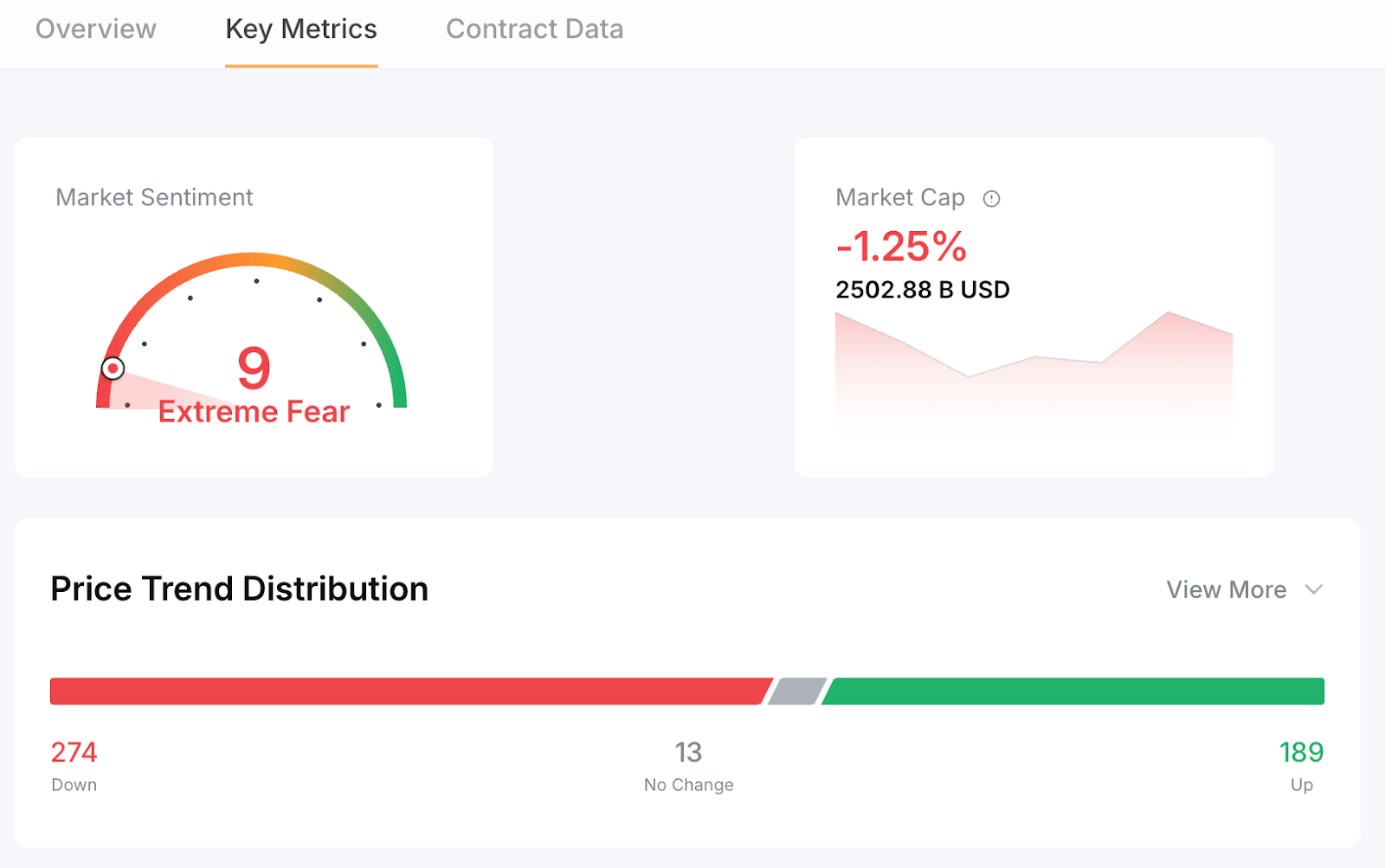
Crypto's advances so far amid the ongoing Middle East conflict, at best, could be seen as mere greenshoots in proving that this asset class is to be widely seen as a "safe haven'.
And to be fair, crypto may one day eventually live up to its hype as the "ultimate" safe haven.
However, that path is very much in its early days and still has a long way to go before such a notion can obtain mainstream belief.
The ultimate "safe haven": If not crypto, what then?
Going by conventional wisdom, the clear winner in this crisis has been the US dollar.
The "buck" just staged its biggest two-day rally in nearly a year, on track for its biggest weekly gain since October 2024.
What makes the dollar's ascent particularly striking is also the fact that it rallied even as traditional havens like gold, as some investors were forced to liquidate metals positions to meet margin calls in other parts of their portfolios as equities sold off.
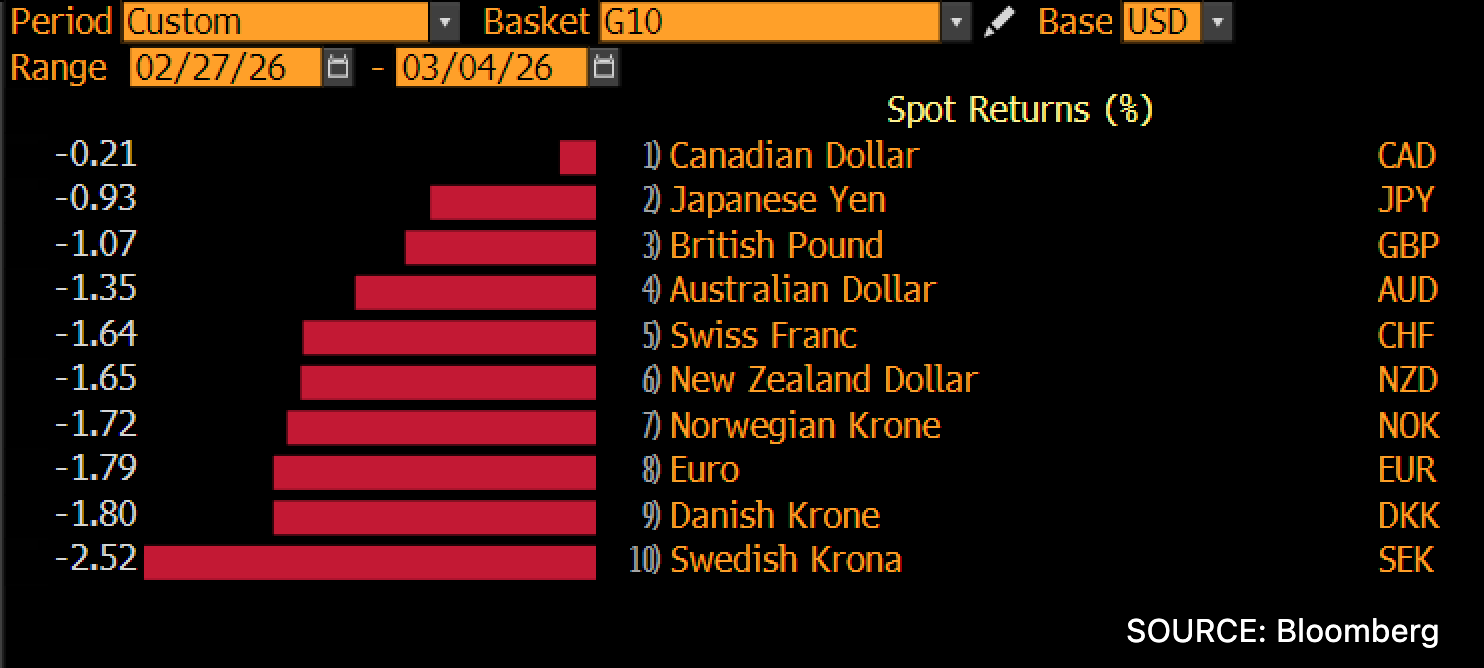
The US dollar has also advanced against all its G10 peers so far this week, even climbing against other traditional safe haven currencies such as the Swiss Franc and the Japanese Yen:
Why is the US dollar climbing?
The dollar's strength stems from multiple factors:
The US dollar's appeal in global funding markets as the escalating war triggers risk-off sentiment
USD benefits from higher oil prices resulting from the conflict due to America's energy independence
Lessened prospects of further interest rate cuts by the Federal Reserve, given the potential for inflation accelerating due to rising oil prices
Markets have certainly dialed back their forecasts for remaining Fed rate cuts in 2026.
At the time of writing: 77% chance of TWO cuts left in 2026
As of last Friday, Feb 27th: 44% chance of THREE cuts left in 2026
NOTE: A currency tends to strengthen at the thought of its country's interest rates staying higher/not going down fast.
Dollar strength set to persist amid Middle Each conflict
President Trump has signaled that strikes on Iran could continue for weeks, prolonging geopolitical uncertainty. While oil could surge to triple-digits, history shows such risk premiums can unwind quickly.
Heightened risk aversion, renewed inflation fears from higher oil prices typically support the US dollar. As traders scale back expectations for Fed rate cuts, the greenback’s role as the world’s primary funding currency should keep attracting capital.
In short, as long as the Middle East conflict drags on and fears loom large, the dollar is likely to retain its safe-haven premium.
However, once risks are seen as contained, the market's attentions may shift back to longer-term downside pressures on the currency.
3 major downside risks to the US dollar
Federal Reserve Independence Under Threat: Trump administration's investigation into Fed Chair Powell and political pressure on the central bank threatens monetary policy credibility, potentially leading to higher inflation and reduced investor confidence in dollar-denominated assets.
Unsustainable Fiscal Deficits: High and rising federal debt levels, concerns about US fiscal spending, and changes to fiscal policy could lead to lower investor appetite for US debt securities, higher interest rates, and potential dollar depreciation.
Trade Policy Uncertainty: US tariff hikes and escalating global trade-war risks may revive debasement/de-dollarization themes, potentially rerouting global trade and putting the dollar's status as a reserve currency at risk.