


The Differences of Long vs. Short Positions in Crypto Trading

Long or short? That is the question. When it comes to trading, we call long positions the buy orders that are placed by traders who want to benefit from the ascending price of an asset — in this case, cryptocurrencies. On the flip side, short positions are sell orders that are typically placed in bearish markets.
While the concept of long and short is simple, understanding the principles behind long vs. short trading is imperative for every trader.
Key Takeaways:
- Long positions profit from rising prices, while short positions benefit from falling prices.
- Whether opening a long or short position, traders should use a combination of technical and fundamental analysis to improve their chances of making profitable decisions.
- It’s crucial to understand that leverage amplifies both gains and losses, and even in long-term bullish markets, sharp short-term corrections can impact both long and short positions.
What are short and long positions?
Long and short positions represent the two potential directions in which price must move for a trader to secure a profit. Traders who go long expect an asset’s price to increase from a specific entry point, while those who go short anticipate that the price will decline.
Going long is equivalent to buying an asset (or opening a "buy" position). Conversely, going short is equivalent to selling an asset (or opening a "sell" position).
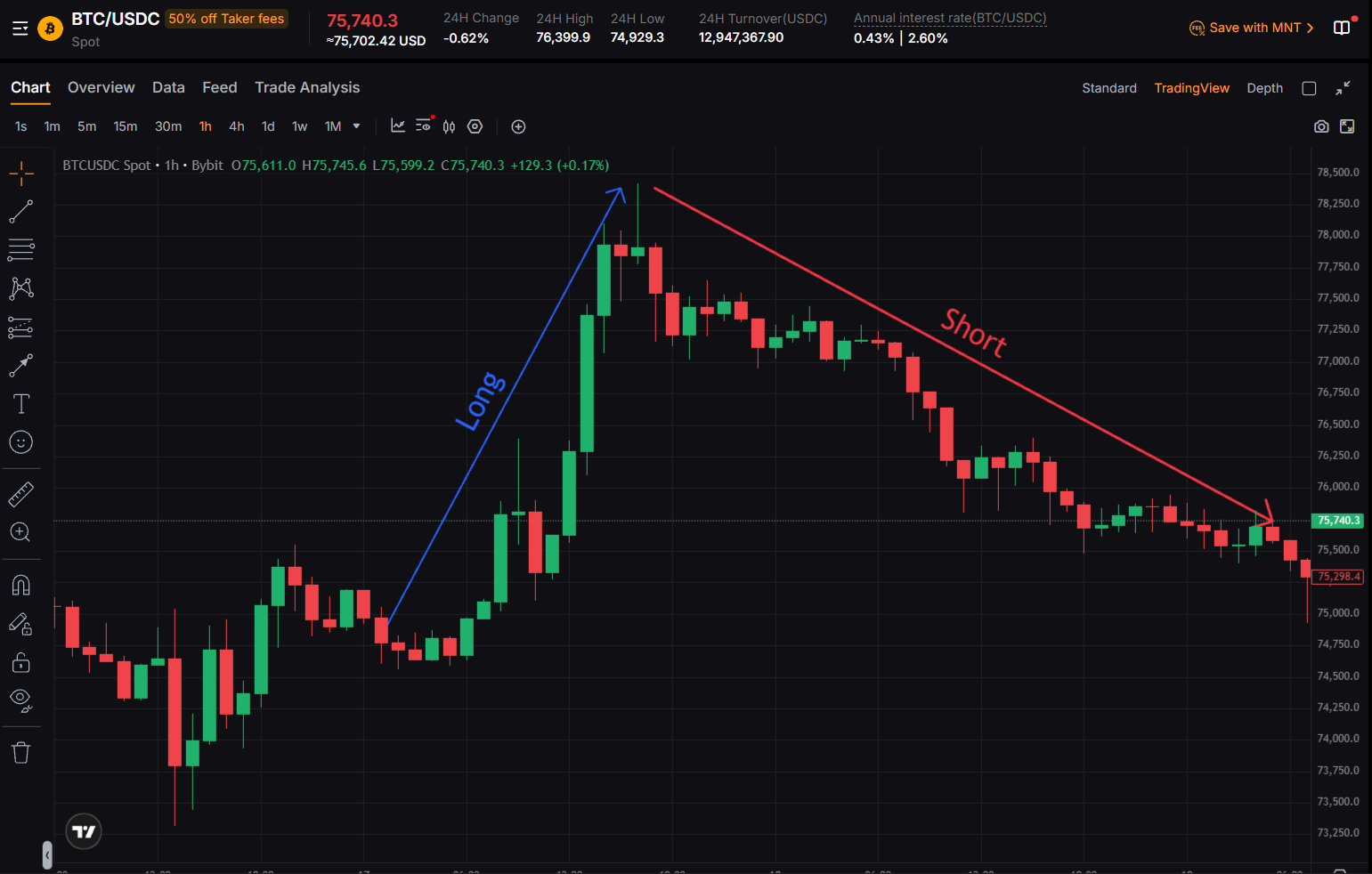
- Long positions: In a long position, a trader purchases an asset and waits for its value to appreciate. Such traders are often called bulls, as they aim to profit from bullish market trends.
- Short positions: Those who go short are betting against the asset, expecting its value to decrease. While the broader cryptocurrency market has historically trended toward expansion over long time frames, it frequently undergoes major corrections, providing opportunities for bearish investors.
Long and short positions across markets
The concepts of long and short positions are universal and apply across all markets. This includes traditional commodities such as oil, which can be volatile and responsive to geopolitical events. For instance, Bybit TradFi now enables you to trade both West Texas Intermediate (WTI) and Brent crude oils directly with your USDT balance, allowing you to capitalize on energy sector price swings by using the same interface as for your crypto assets.
These concepts are also incorporated into hybrid investment products, such as derivatives, tradable instruments that track the price of an underlying asset. Derivatives allow you to go long or short on a given asset without directly owning it. For instance, futures contracts and Perpetual contracts on Bybit let you leverage market price fluctuations using USDT, USDC or base assets as collateral.
Traders can mix long and short positions to create reliable hedging strategies, which help minimize potential losses by balancing exposure across different market directions.
To maximize capital efficiency, many traders utilize Bybit Spot Margin trading, which allows you to use a variety of assets in your Unified Trading Account (UTA) as collateral to borrow funds from Bybit. This enables you to open either long or short positions with leverage across spot, perpetuals and options, significantly amplifying your potential returns — or losses — compared to trading with your own funds alone.
While leverage can greatly accelerate your portfolio's growth, it’s imperative to use risk management tools such as stop-loss orders since the risk of liquidation increases with the level of leverage.
Differences between short and long positions
Short and long positions are antagonistic in nature. When a long trade is generating profits, a short trade on the same digital asset will deplete the balance.
Also, the psychology of bulls and bears differs in the sense that bears tend to be more conservative, while bulls like to take risks and experience new strategies. However, these are only stereotypes. Short sellers are also taking risks during bullish markets.
Understanding short position
As mentioned, short trades are the ones that generate profits when you bet against a cryptocurrency. Generally, when you sell a cryptocurrency, you buy the quoted currency, whether it’s fiat or crypto. Thus, if you sell Bitcoin, you buy US dollars, USDT or any other altcoin or fiat currency.
Traders should go short when they expect the price of a digital currency to decrease. For instance, if you’re a day trader and feel that the price of Bitcoin will decline during the following days or even weeks, you would be interested in opening a short position. You can either sell Bitcoin for fiat and then buy it at a lower price, or go short via futures, options, contracts for difference (CFDs), or other derivatives.
Before opening a short position
Needless to say, analyze the market first and then make a decision. Day traders should rely on both technical and fundamental analysis. If you trade a DeFi token, you may want to check whether the project is viable, has secured investments from well-known blockchain investors, or perhaps has partnered with well-established firms.
You can check the sentiment on social media and news sites. Besides conducting fundamental analysis, you can analyze the price action itself. You can use indicators and look for chart patterns.
After opening a short position
There are certain chart patterns and candlestick patterns that anticipate a price correction or downtrend.
Bearish chart patterns: Patterns such as double tops, head and shoulders and triple tops are often used to confirm a bearish reversal or continuation.
Candlestick signals: Traders often look for bearish candles like the hanging man, shooting star or the gravestone doji to signal a shift in downward momentum.
Support level breakdowns: Traders may short an asset if its price falls below established support — especially after the price has traded within a defined range, signaling a potential downward move.
Channel resistance rejections: Some traders open short positions when price approaches a channel’s resistance, anticipating a reversal toward the channel’s support, rather than a breakout.
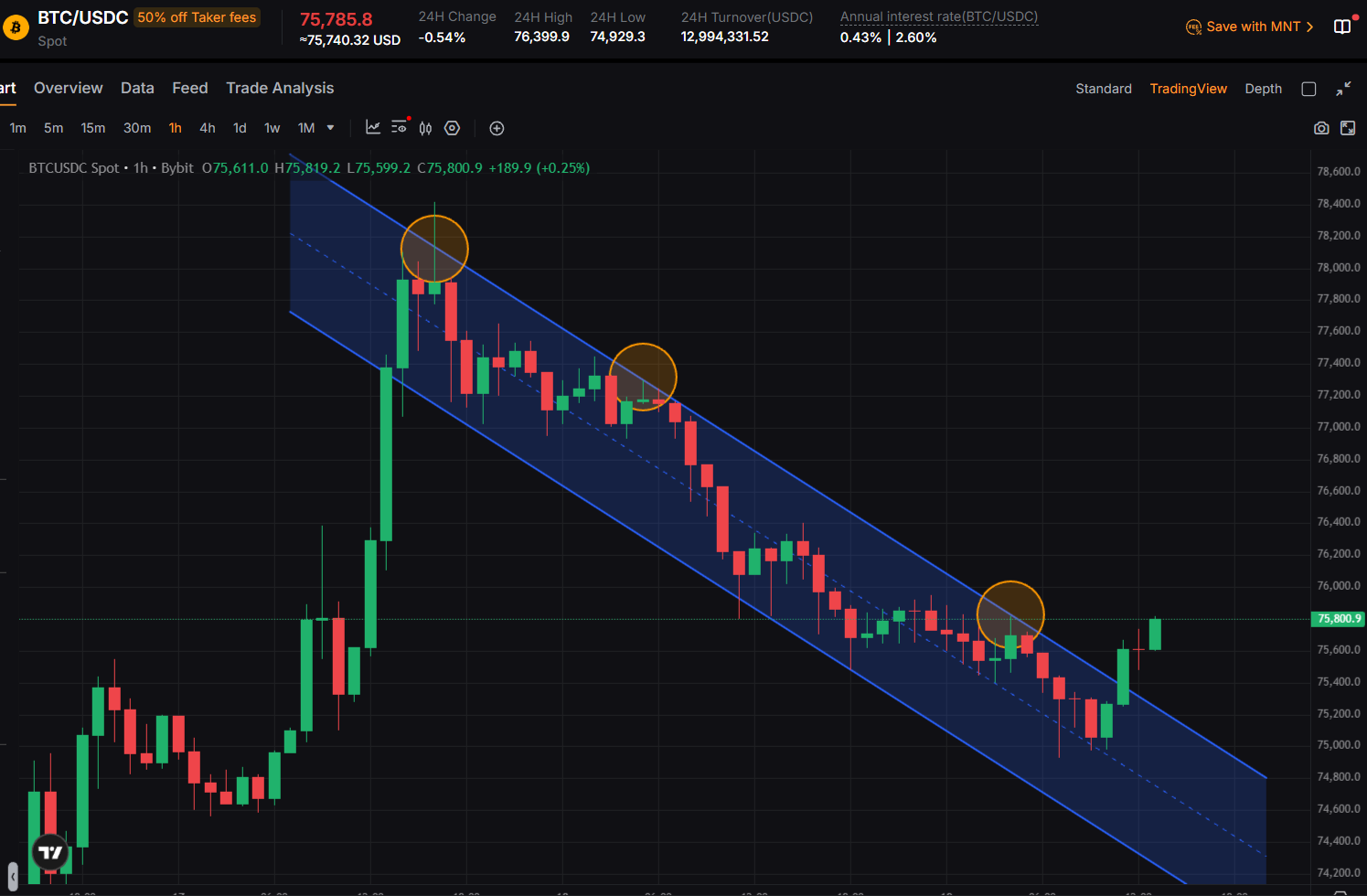
Irrespective of the kind of analysis you prefer, you need to feel confident that an asset’s price will decline if you plan to open a short position. Otherwise, you’ll find yourself trading against the market.
Understanding long trades
When the market displays bullish characteristics, traders typically seek to go long. Opening long positions can generate significant profits during sustained rallies, such as the major crypto market expansion seen throughout 2023 or the significant price surges in 2025.
Before opening a long position
It’s essential to back your move with reliable market analysis, rather than relying solely upon sentiment. You can wait for the price to break above a strong resistance level, or go long during an ongoing rally with the expectation of continued momentum
Another approach preferred by long-term investors is the "buy-and-hold" strategy, which involves holding assets for months or even years, expecting price appreciation despite periodic corrections. This often involves buying the dip — entering a long position after temporary declines within an overall uptrend.
Day traders often look for specific technical triggers before going long:
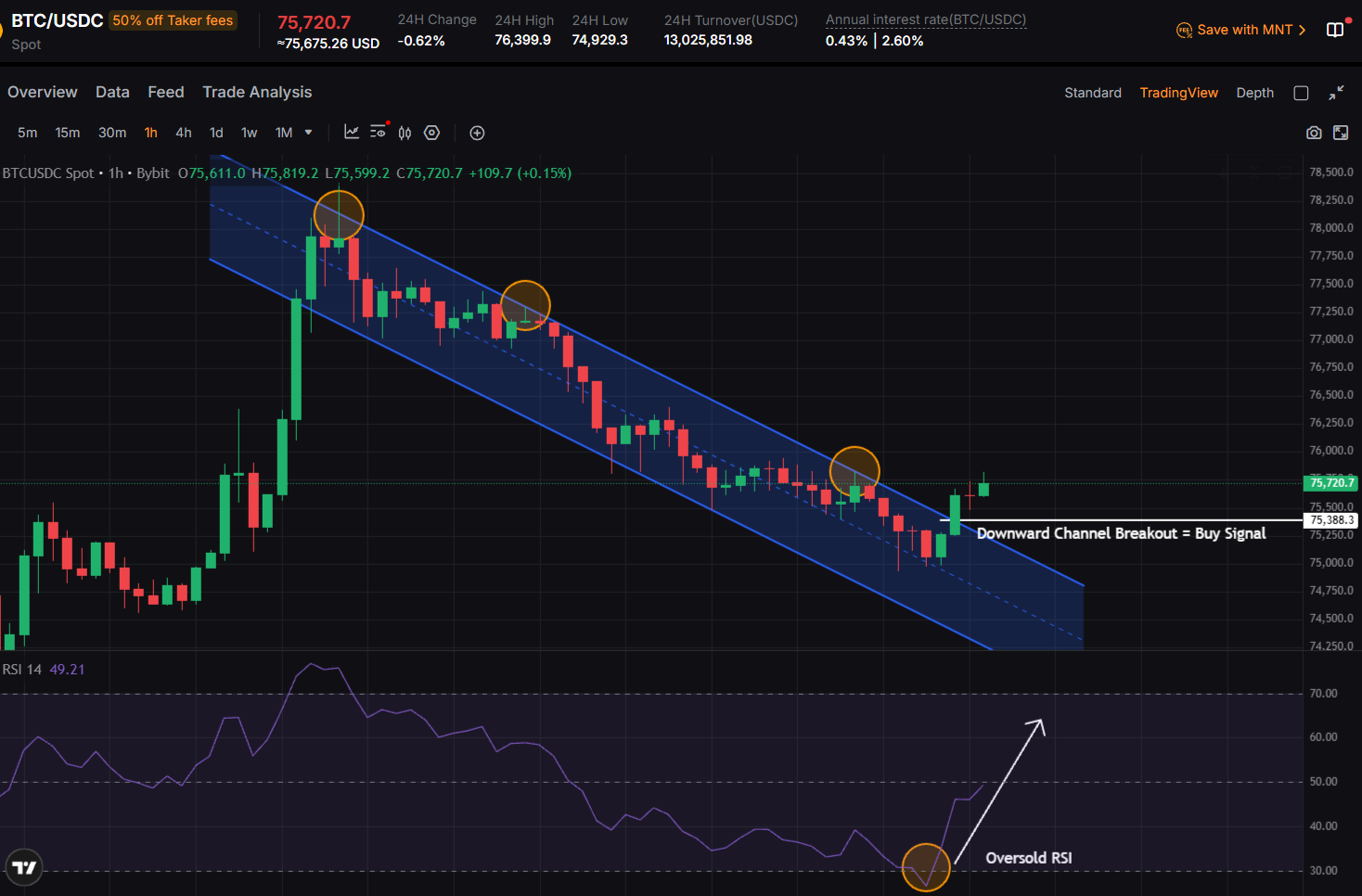
- RSI and stochastic RSI: Traders look for oversold readings on indicators such as the relative strength index (RSI) in order to identify optimal long entry points, since low RSI levels may indicate potential market reversals.
- Bullish chart patterns: Patterns such as the double bottom, inverse head-and-shoulders or ascending triangle are often used to confirm a bullish reversal or continuation.
- Candlestick signals: Traders look for bullish candles like the hammer or dragonfly doji to signal a change in momentum.
After opening a long position
Although the cryptocurrency market has seen increased institutional adoption, it remains more volatile as compared to traditional foreign exchange or equities markets. Traders must be prepared for short-term price swings that may defy technical analysis. However, market maturation, marked by regulatory developments and new products, has provided a stronger basis for long-term bullish trends.
The good news for bullish traders is that digital currencies often mirror the behavior of high-growth technology stocks. Most major assets are traded against the US dollar, and have historically trended higher over multiyear cycles. With the introduction of Bybit’s UTA, traders can now manage these long positions with greater capital efficiency, using their overall account balance to support various positions across both spot and derivatives markets.
Current market conditions highlight the importance of monitoring external factors, including macroeconomic shifts and institutional inflows. In contrast to forex pairs, which typically oscillate within broad ranges, major cryptocurrencies are increasingly regarded as stores of value, presenting long-term opportunities for those who can navigate the intermediate volatility.
Can I go either short or long in all financial markets?
The answer is yes. Traders go long and short across virtually all asset classes. In fact, the ability to take a position on either side of the market is a defining characteristic of modern trading. While the basic trading concepts remain the same, the complexity of these positions increases when you move from spot markets to derivatives.
The role of options
Options are contracts that give the holder the right, but not the obligation, to buy (call) or sell (put) an asset at a fixed strike price within a set time frame. Calls reflect bullish positioning, while puts are used for bearish views.
Bybit options offer European-style, cash-settled contracts that can be exercised only at expiration, but traded until then. The cash-settlement mechanism removes the need for physical delivery of the underlying asset, thus streamlining speculative and hedging strategies.
Expanding your reach with Bybit TradFi
For traders looking to diversify beyond digital assets, Bybit TradFi provides a seamless bridge to traditional global markets. This service allows you to trade forex, metals such as gold and silver, commodities and stock CFDs, all using USDT margin.
With Bybit TradFi, you can gain long or short exposure to various traditional markets directly from your Bybit account, using USDT as collateral to move capital between crypto and traditional markets as desired to capture opportunities wherever they arise in the global economy.
The bottom line
Long and short positions are the essence of trading, and traders strive to understand forming trends in order to make the right decisions. Still, going long or short is only half of the job, as finding the best entry point is also extremely important.
Whether you're trading spot or derivatives, or using margin to amplify your exposure, tools like the UTA and risk management features such as stop-loss orders can help you manage positions with greater capital efficiency. However, remember that leverage increases both potential returns and the risk of liquidation — so always trade with a clear plan. #LearnWithBybit
