


Bybit x FXStreet TradFi Report: Precious metals: Gold, silver, platinum and palladium extend 2025 rally

Key Highlights:
Gold, silver, platinum and palladium up 60–83% YTD
Ongoing US shutdown, tariffs and inflation drive safe-haven demand
Gold hits $4,218 and silver reaches $53.50, with more upside possible
Technical indicators suggest momentum is still intact
Trade with Bybit MT5 on FX movements here.
Precious metals shine in 2025
The demand for precious metals is surging in 2025, with the four core assets — gold, silver, platinum and palladium — experiencing one of their strongest rallies in years. Prices have exploded across the board, as geopolitical tensions, inflation concerns and US fiscal uncertainty drive investors into safe-haven and non-printable assets.
What unites these four precious metals is a rare combination of characteristics:
They’re priced in ounces, due to their high value
They have limited or fixed supply
They’re used in both industry and jewelry
They’re considered stores of value in uncertain times
Importantly, they’re actively traded in global financial markets
With markets looking for stability amid volatility, gold is up 60% year-to-date, silver has gained 82%, platinum is higher by 83% and palladium has rallied 75%. The momentum has intensified in recent weeks as new risks emerge globally.
Why precious metals’ prices are rising
1. Trump tariffs and a weaker US dollar
The renewed implementation of broad tariffs by President Donald Trump has had multiple effects on markets. First, tariffs tend to weigh on the US dollar, encouraging investors to seek neutral assets that aren’t tied to any one currency. Secondly, market participants are preparing for possible direct tariff impacts on metals, similar to past moves on aluminum or copper.
2. War in Ukraine drags on
The continued war in Ukraine is pushing investors to diversify portfolios with a greater share of neutral, globally accepted assets. With no diplomatic resolution in sight, metals are gaining appeal as long-term hedges.
3. Inflation concerns persist
While inflation has come down from its pandemic-era peak, it remains elevated. The concern now is that inflation could accelerate again, whether due to tariffs, geopolitical conflict or supply chain disruptions. Investors are turning to precious metals as a hedge, fearing a repeat of 2022's inflationary spike.
4. US government shutdown
The US government shutdown has now extended beyond two weeks. If it continues, it could begin to raise unemployment and affect the job market. This would increase pressure on the Federal Reserve to respond with more aggressive interest rate cuts. In such an environment, investors typically rotate into assets with fixed supply, especially those that cannot be printed, such as gold and silver.
Technical price setups
Gold
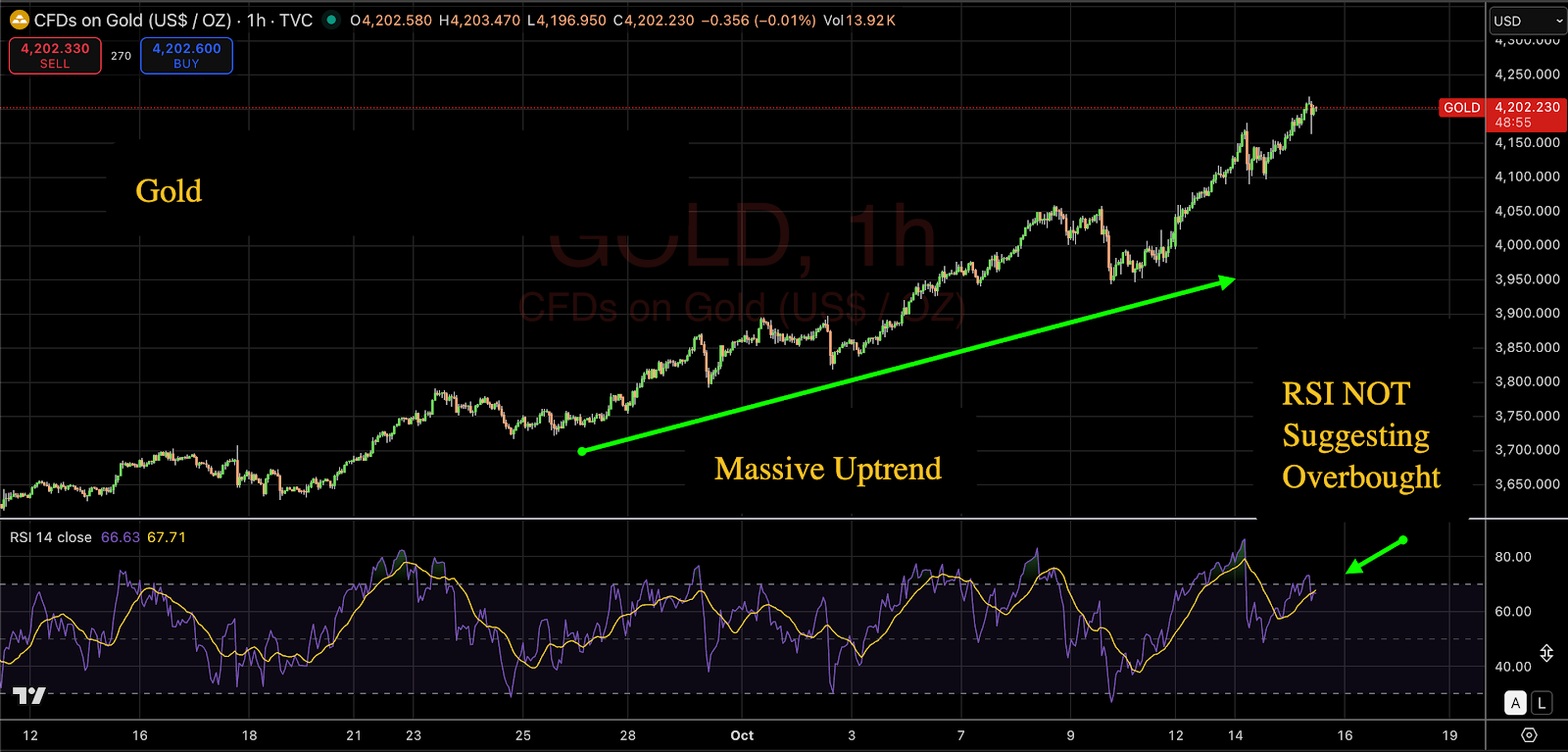
Gold surged to a new all-time high of $4,218 on October 15, smashing past the previous year-end target of $4,000 well ahead of schedule. With market uncertainty rising, a new year-end target of $4,500 is now on the table.
Technical momentum remains supportive. Gold’s relative strength index (RSI) on the 1-hour chart is trading below 70, far from overbought territory. Earlier this year, gold maintained strong uptrends even when RSI readings passed 80. As long as current macro risks persist, upside potential remains intact.
Source: TradingView
Silver
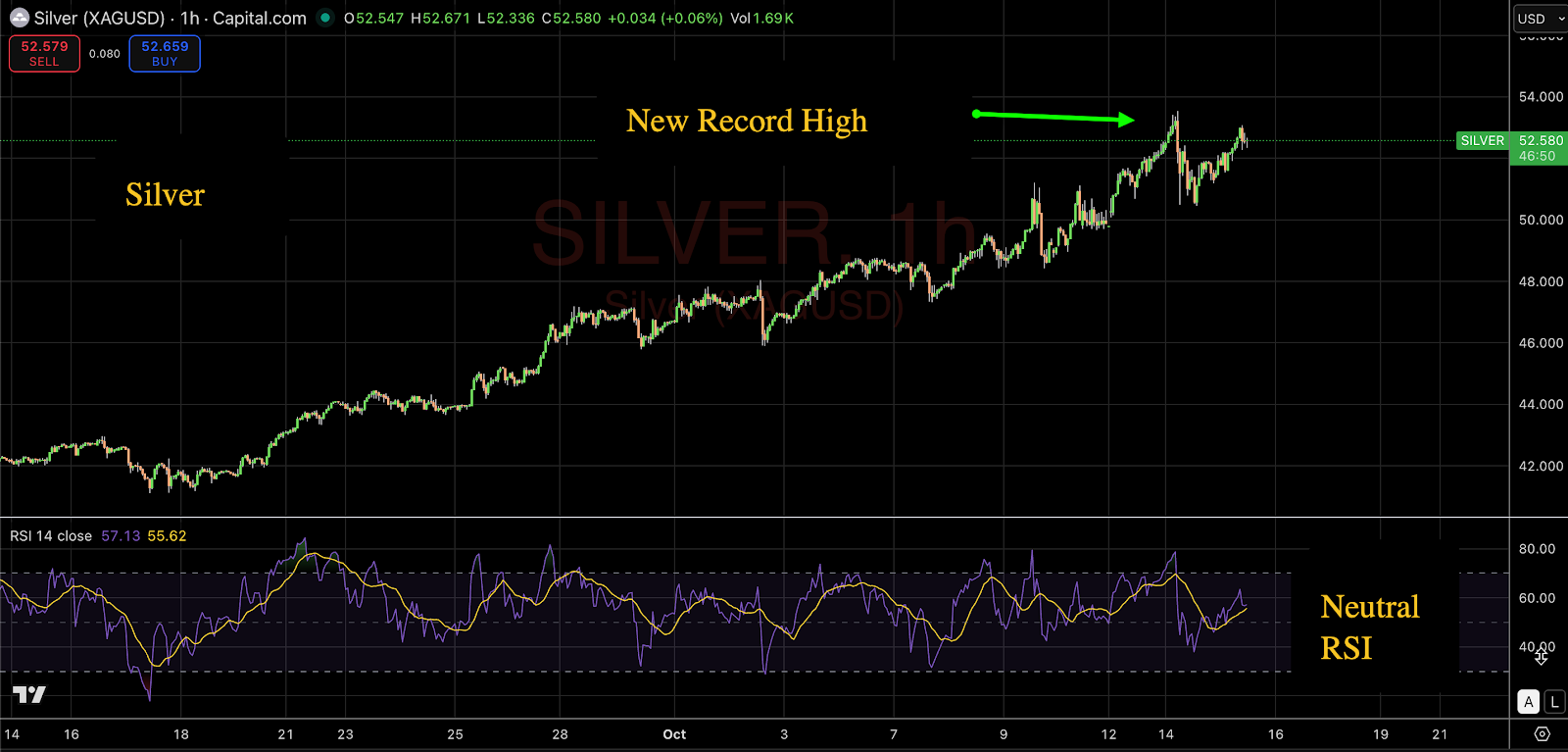
Silver hit a record $53.50 on October 15. Unlike gold, silver has a smaller market capitalization, making it more likely to break out sharply when demand surges. That’s exactly what traders are seeing now, with silver up more than 80% this year.
Volatility remains elevated, but silver’s RSI is surprisingly neutral, even at record highs, implying that it could extend toward $60 and possibly $75 by year end. With no strong overbought signals yet, price action could remain explosive.
Source: TradingView
Platinum
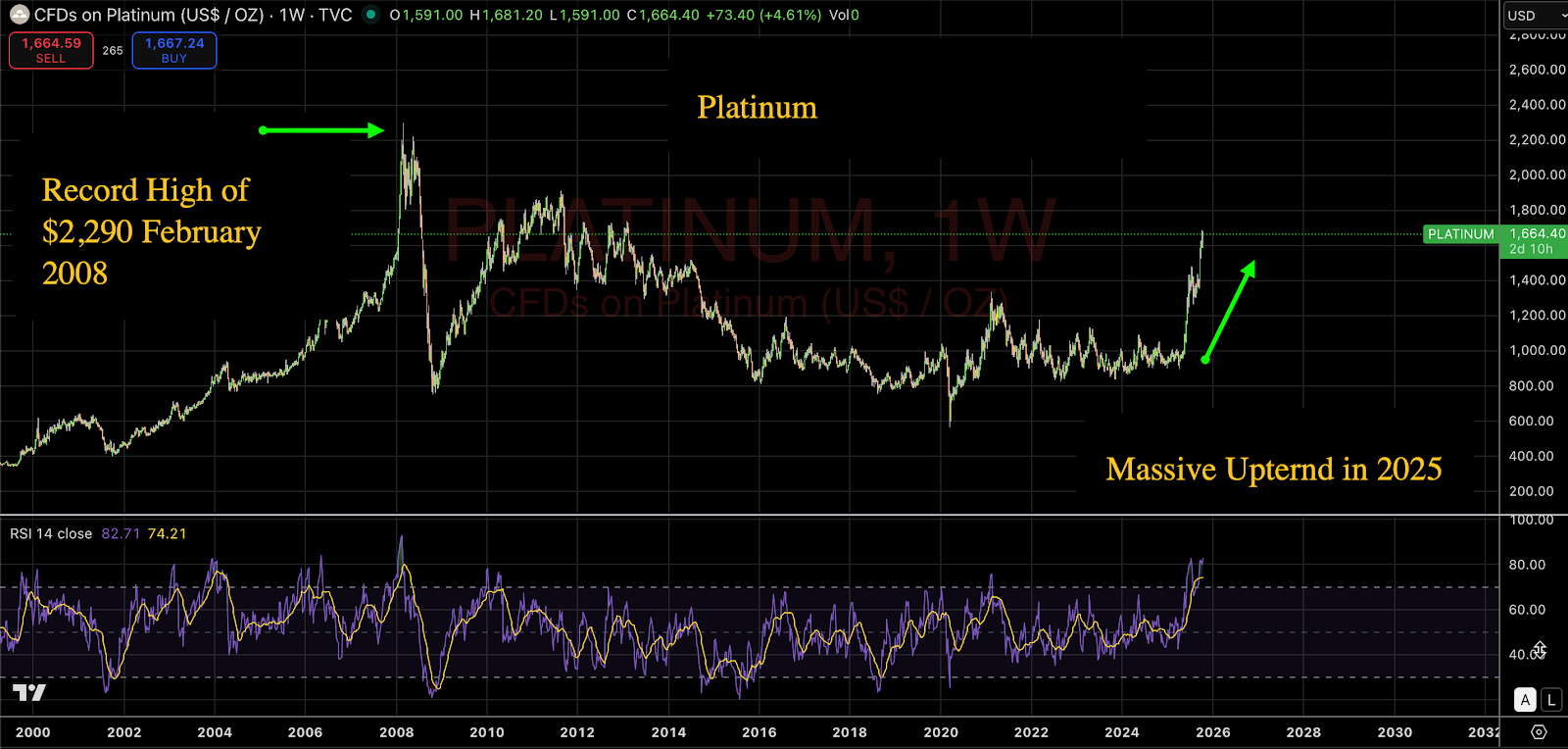
Platinum is trading at around $1,658 an ounce, still well below its all-time high of $2,290, set back in February 2008. That leaves substantial upside potential, as the metal would need to rally just another 38% to retest its record.
This disconnect is drawing trader interest. Platinum has already gained 83% in 2025, and its RSI remains moderate at 58, suggesting a neutral momentum environment. If financial conditions remain uncertain, platinum could play catch-up with gold and silver.
Source: TradingView
Palladium
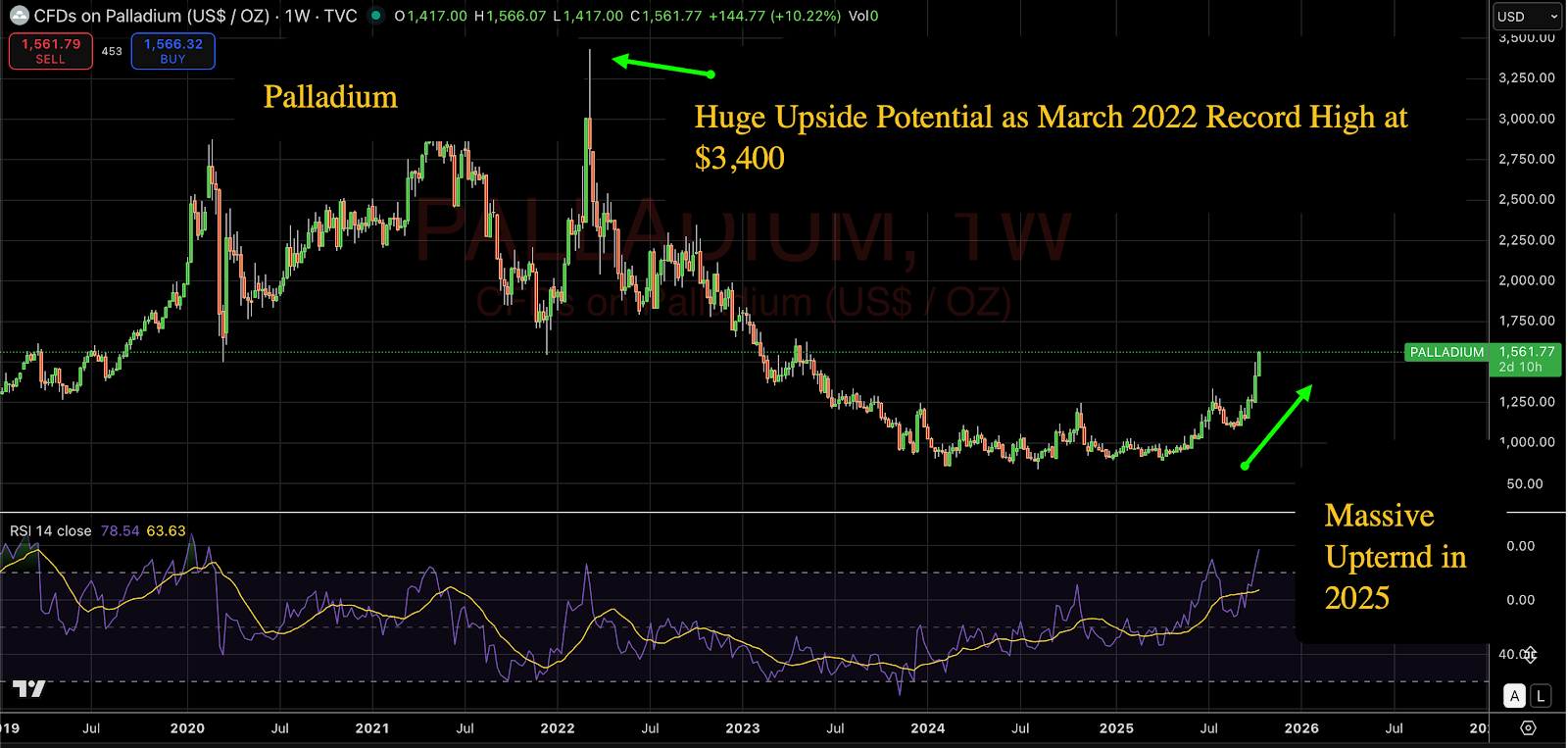
Palladium, while primarily used in industry (rather than for jewelry or as a reserve asset), is also benefiting from the flight to value. The precious metal is currently trading near $1,546, well below its 2022 record of $3,400, reached during early Ukraine war supply shocks.
This leaves more than 100% upside from current levels. As with other metals, Palladium’s RSI doesn’t indicate an overbought environment, meaning the rally may still have legs. Palladium’s performance also reflects broader fears around inflation and supply instability.
Source: TradingView
Precious metal characteristics: What traders should know
One reason these assets behave differently than others is their supply model. Gold, silver, platinum and palladium cannot be created at will. Unlike fiat currencies, their supply is constrained by mining output, and refining takes time and investment.
All four metals are priced in troy ounces (approximately 31 grams), and because of their value, they’re traded globally as standardized financial contracts. This makes them uniquely responsive to macroeconomic conditions, such as interest rates, inflation and geopolitical tension.
While copper and aluminum are also metals, they’re priced differently (in pounds or tons), and are more directly tied to industrial cycles. In contrast, the big four precious metals serve a dual purpose, both industrial and monetary.
Looking ahead
With US interest rates expected to fall, and the dollar under pressure from both domestic politics and global risk sentiment, precious metals are positioned for continued strength. Investors are increasingly turning to hard assets as traditional hedges, especially when confidence in fiat money or central bank policy drops.
Traders should monitor several key macro triggers:
A prolonged US government shutdown
Further tariff announcements
Shocks in inflation or labor data
Continued stagnation or escalation of the Ukraine war
Each of these risks could generate renewed demand across the metals complex.
Conclusion
The precious metals rally of 2025 is being driven by a perfect storm of macro forces: policy uncertainty, inflation risk, geopolitical conflict and demand for real assets. With gold’s price already above $4,200 and silver’s past $53, the stage is set for further upside, particularly if global instability persists.
Technical momentum remains supportive, and year-end targets across the board are being revised higher. For traders, this is a market worth watching closely, with opportunities in both directional trades and volatility strategies.