


Bybit x FXStreet TradFi Report: Japan’s historic leadership shift fuels Nikkei rally, weakens yen

Key Highlights:
Sanae Takaichi becomes Japan’s first female prime minister
Yen hits record lows vs. euro and reaches 150 vs. dollar
BOJ rate hike expectations delayed to December
Nikkei could surge toward 50,000 on stimulus hopes
October’s BOJ meeting and cabinet formation are in focus
Trade the FX movements with Bybit MT5.
Political milestone shakes markets
Japan is undergoing a major political shift with significant market implications. Sanae Takaichi, a veteran lawmaker from the ruling Liberal Democratic Party (LDP), has won the party’s leadership race and is now set to become Japan’s first female prime minister. This development comes amid a turbulent political background, and markets have already responded decisively.
The yen plummeted on the news, breaking past 150 against the US dollar and reaching historic lows versus the euro. At the same time, the Nikkei 225 surged 4.8% to a new all-time high, while the broader TOPIX gained 3.1%. Traders are adjusting to the possibility of looser monetary policy and more fiscal stimulus in the months ahead, a combination that spells weakness for the yen but strength for Japanese equities.
Why markets reacted so quickly
The resignation of Prime Minister Shigeru Ishiba on September 7 triggered an internal LDP contest. Takaichi emerged victorious in a runoff against Shinjirō Koizumi, who had been widely seen as the favorite. The win was described as a surprise by many political observers, but traders immediately priced in what it could mean for monetary policy.
Takaichi is seen as a pro-growth candidate with a high tolerance for fiscal stimulus. She has pledged to ease pressure on households by cutting fuel taxes, and has signaled a willingness to spend on domestic infrastructure if growth slows.
Investors interpreted her stance as dovish. Betting markets, which had placed a 60% chance on a Bank of Japan rate hike in October, quickly revised their expectations downward. Odds of a near-term hike dropped to 24%, and the yen sold off sharply. Meanwhile, Japanese stocks benefited from the prospect of continued low interest rates and government spending.
Near-term calendar: Two key catalysts
Markets are now watching two important dates that could shape Japan’s market trajectory in October.
October 15 — Parliamentary confirmation
Takaichi’s appointment must be formally approved by a vote in both houses of parliament. Although the LDP lost its outright majority in the lower house during the 2024 election, it remains the largest party. Political analysts expect the vote to pass with ease, making her Japan’s new prime minister in mid-October.
October 29–30 — Bank of Japan policy decision
This meeting is the real market mover. Prior to Takaichi’s win, the BOJ was widely expected to deliver a hike in October. Now, consensus has shifted toward a delay, possibly until December. This shift in expectations has been the primary driver behind the yen’s weakness and the stock rally.
The BOJ’s communication and guidance during this meeting will be crucial. Any signs that rate hikes are off the table for the rest of the year could further pressure the yen, and lift risk assets. Conversely, if the central bank surprises with a hike, markets could sharply reverse course. The current interest rate is 0.5%, and markets are now pricing in a likely hike to 0.75% in December.
USD/JPY: Crucial resistance test
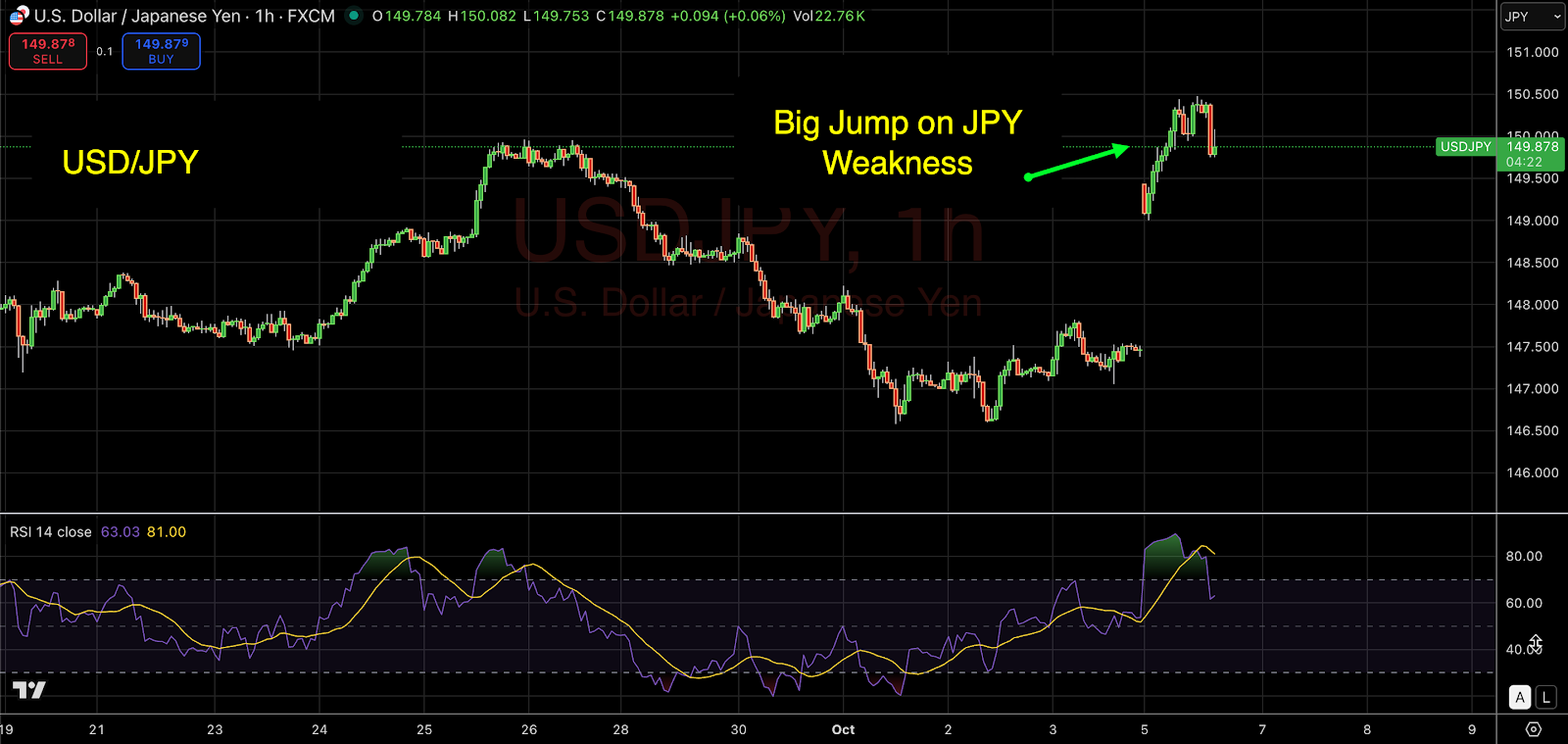
The USD/JPY pair has broken above the psychological 150 level, a key area of resistance. Technical momentum is strong, with its RSI near 78, an area that has previously led to short-term pullbacks. Traders are watching closely to see if the pair can hold above 150 for a sustained period. A confirmed breakout could target the 153–155 range, while failure to hold could trigger a retreat back toward 146.
Source: TradingView
EUR/JPY: Record highs test volatility
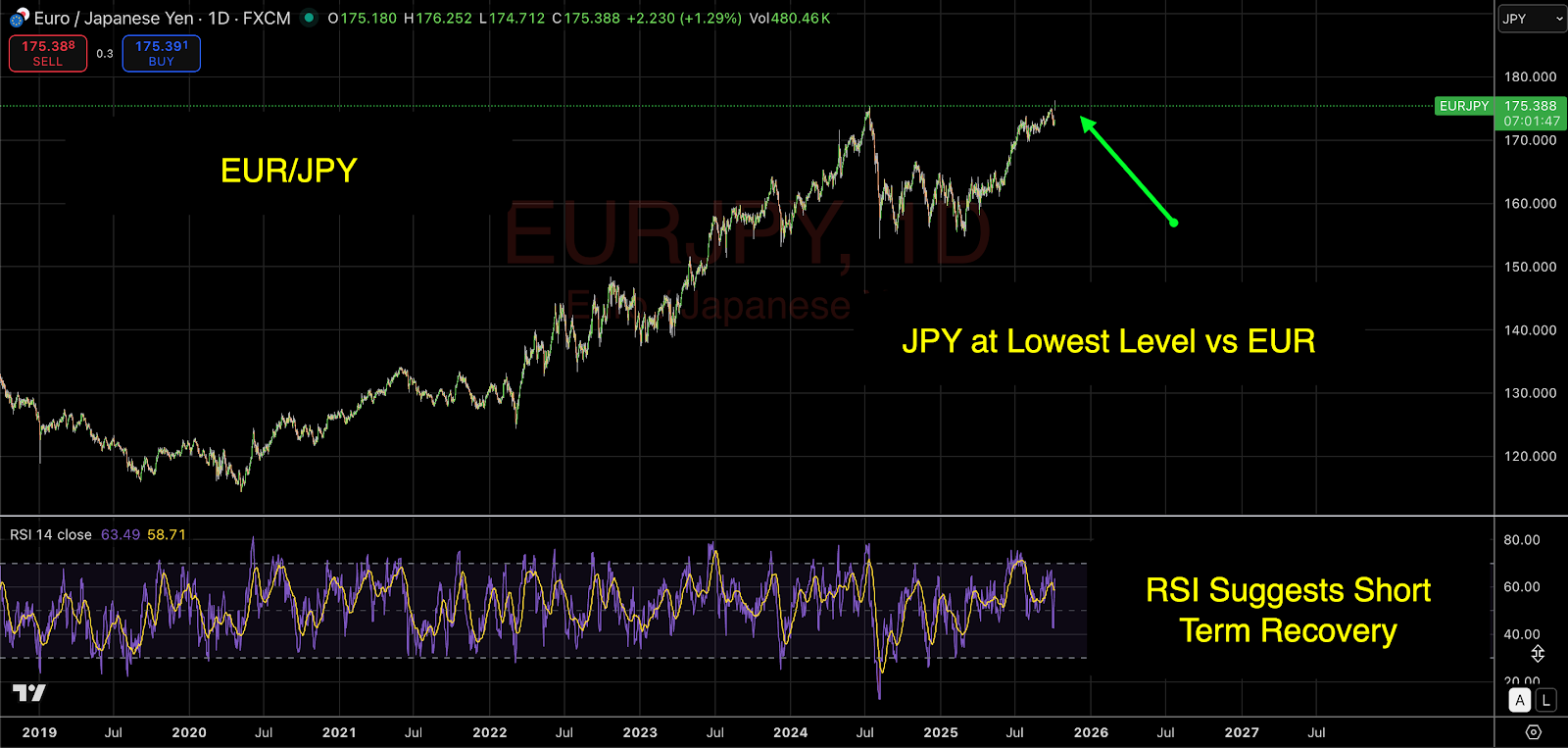
The EUR/JPY pair surged to a record high of 175, reflecting the yen’s weakness. This marks the weakest level for the yen against the euro in modern history. The pair is trading with an RSI near the 70 level, suggesting that momentum may be stretched in the short term. More upside momentum could easily push the pair above the amazing level of 180.
Source: TradingView
Nikkei 225: Rally eyes 50,000
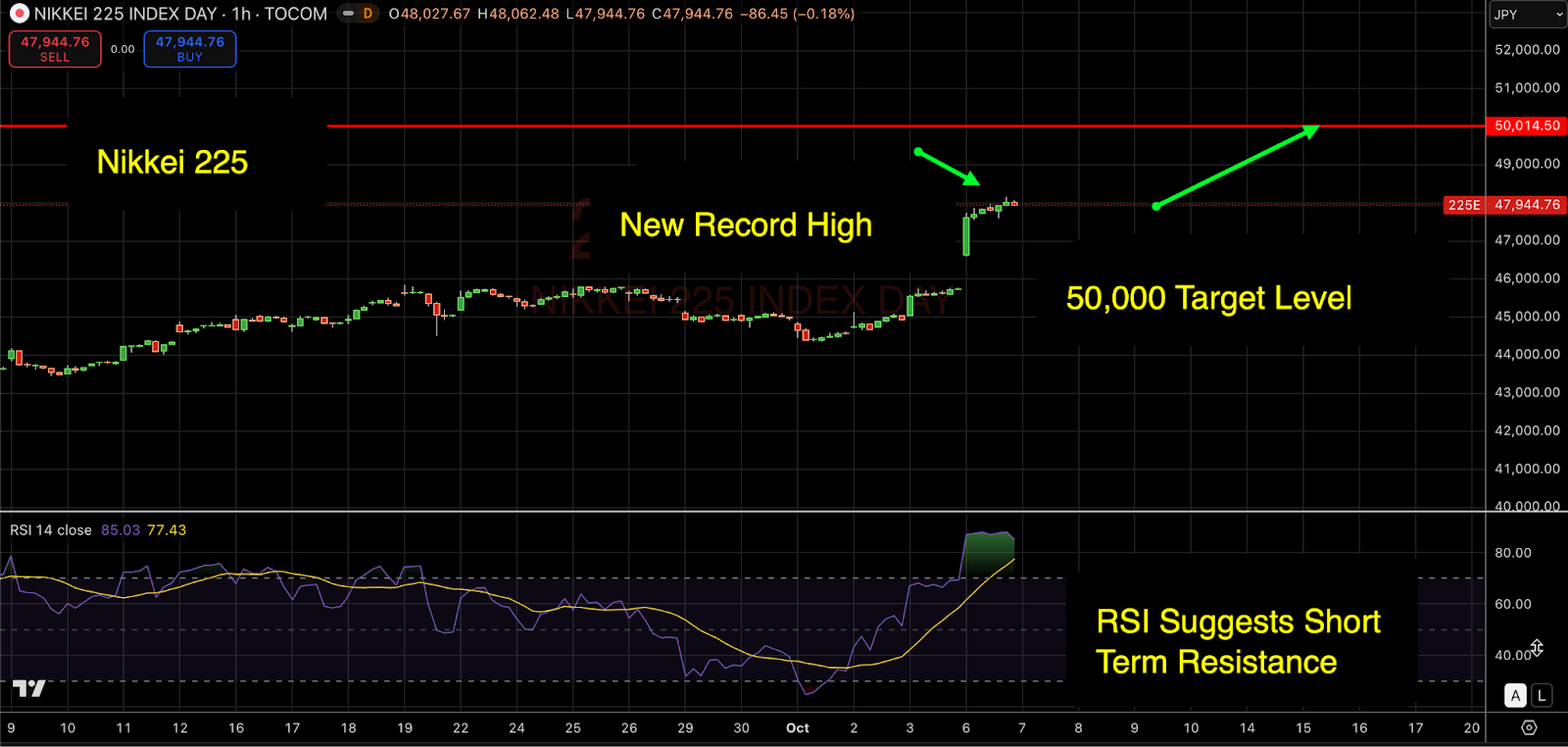
Japanese equities have become a standout performer, with the Nikkei 225 jumping nearly 5% on the political news and approaching the 48,000 mark. Investors are betting on a continuation of low rates and renewed fiscal spending under Takaichi’s leadership.
Technically, the 50,000 level is now in sight. The rally has been broad-based, and correlation with yen weakness remains strong. As the yen weakens, exporters benefit, and capital flows into equities increase. The RSI on the one-hour chart shows short-term resistance, but the broader trend remains bullish.
One way to understand the dynamic is as follows: the yen supply can increase rapidly through monetary policy, while stock supply is relatively fixed. This imbalance supports asset prices, especially when confidence in leadership stabilizes and the economic outlook is steady.
Source: TradingView
Conclusion: A new era for Japan
Sanae Takaichi’s rise marks a turning point for Japan’s political and economic trajectory. While her leadership brings new opportunities for reform and growth, markets are focused on near-term signals: low interest rates, fiscal easing and the Bank of Japan’s next move.
The implications are already clear in the charts: a weaker yen, stronger Nikkei and revised expectations for monetary tightening. For traders, the message is simple: Japan has returned to center stage in global macro.
Stay alert to October’s key events. The confirmation vote and BOJ meeting could define Japan’s market path for the remainder of 2025.