


SpaceX stock outlook in 2026: How to invest in SPCX on Bybit

SpaceX completed its much-publicized IPO on Jun 12, 2026, instantly joining the global top-10 by market capitalization. What followed was anything but a quiet debut: the stock surged past $200 within days, briefly touching a $3 trillion valuation before pulling back to $153 as the initial hype settled.
In this article, we look at SPCX's post-IPO performance, its 2026 outlook, key bullish and bearish factors and how to invest in it on Bybit.
Key Takeaways:
SpaceX completed the largest IPO in history on Jun 12, 2026, raising $75 billion at $135 per share with a debut valuation of $1.77 trillion.
SPCX surged to an intraday high of $225 on June 16 before pulling back. As of June 26, the stock sits at $153, up 13.3% from its IPO price.
Bybit offers multiple ways to invest in SPCX: as a tokenized xStock, an on-chain Alpha token, a TradFi Perpetual contract and a leveraged CFD.
SpaceX (SPCX) market performance in 2026
SpaceX priced its IPO at $135 per share on Jun 12, 2026, targeting a $1.77 trillion debut valuation. The offering initially raised $75 billion. Underwriters then exercised their option to sell additional shares, bringing total proceeds to $86 billion and cementing the deal as the largest capital raise in IPO history.
First-day trading closed at $160.95, a 19.2% jump from the IPO price. Four days later, on June 16, SPCX hit an intraday high of $225, briefly pushing its market cap toward $3 trillion and temporarily placing it among the four largest publicly traded companies in the world. That rally reversed sharply in the sessions that followed.
As of Jun 26, 2026, SPCX is trading at $153, up 13.3% from its IPO price, with a market cap of around $2 trillion, making it among the top 7–10 largest public companies globally. Analyst ratings currently point to the median 12-month price target of $227 and the average of $188–$243, representing potential upside of 23–59% from current levels (40–80% from the IPO price), with roughly 5–6 buy, two hold, one underweight and 1–2 sell ratings.
SPCX stock outlook in 2026
Bullish factors
The IPO was four times oversubscribed, with institutional anchors such as BlackRock and multiple sovereign wealth funds placing orders of approximately $10 billion each. That level of institutional demand signals long-term hold intent from some of the largest market players in the world.
Starlink is the commercial engine behind the bull case. The satellite broadband segment is scaling rapidly across consumer, enterprise and government contracts globally. Falcon 9, meanwhile, remains the world's most prolific orbital launch vehicle, operating with a deep backlog that insulates the Space segment. Full-year 2025 revenue reached $18.7 billion, reflecting a strong growth trajectory and providing a credible operational foundation for the optimistic valuation.
Under Nasdaq's fast-entry rules, SPCX is eligible for inclusion in the Nasdaq-100 within 15 trading days of its IPO, which would trigger forced buying by passive funds, as every index fund tracking the index must purchase shares in proportion to SPCX's assigned weight.
Additionally, Elon Musk's 366-day lockup and the staggered unlock schedule for pre-IPO investors further limit available supply over the next year.
Bearish factors
Valuation is probably the main risk factor for the stock. At roughly 110x trailing price-to-sales against 2025 revenue of $18.7 billion, SPCX commands a ratio that pales in comparison to its key AI peers, such as NVIDIA’s 19x.
Morningstar’s assessment highlights bearish signals, with the investment firm assigning a fair value of $63 per share and separately assigning only a 7% probability that Starship will reach commercial viability.
On top of that, Musk retains over 80% of voting rights, placing SpaceX outside the investment mandates of most ESG-focused funds and limiting minority shareholders' ability to influence capital allocation. The capital allocation issue is among the core bearish factors here: Starship is intensely capital-intensive, with no confirmed commercial revenue timeline, and lockup expirations over the next 12 months could trigger successive waves of selling pressure.
The company’s revenue scale remains the hardest number to argue around. SpaceX generated $18.7 billion in revenue in 2025, dwarfed by peers with similar market caps, such as Amazon, which generated $742.8 billion over the same period. The current valuation relies almost entirely on future execution across Starlink subscriber growth, Starship commercialization and AI infrastructure monetization.
What retail investors need to know
SpaceX holds a commanding position in commercial launch services and satellite broadband, with no competitor meaningfully close in either vertical. Institutional demand and the potential tailwind of Nasdaq-100 index inclusion support the stock’s near-term prospects.
On the other hand, valuation is a key concern for many analysts. Whether Starlink subscriber growth and Starship commercialization can eventually close the gap between a $2 trillion valuation and $18.7 billion in annual revenue is a question few will dare to answer with confidence.
How to invest in SPCX on Bybit
Bybit offers several distinct routes to exposure to SpaceX prices, each one with a different risk profile and access method.
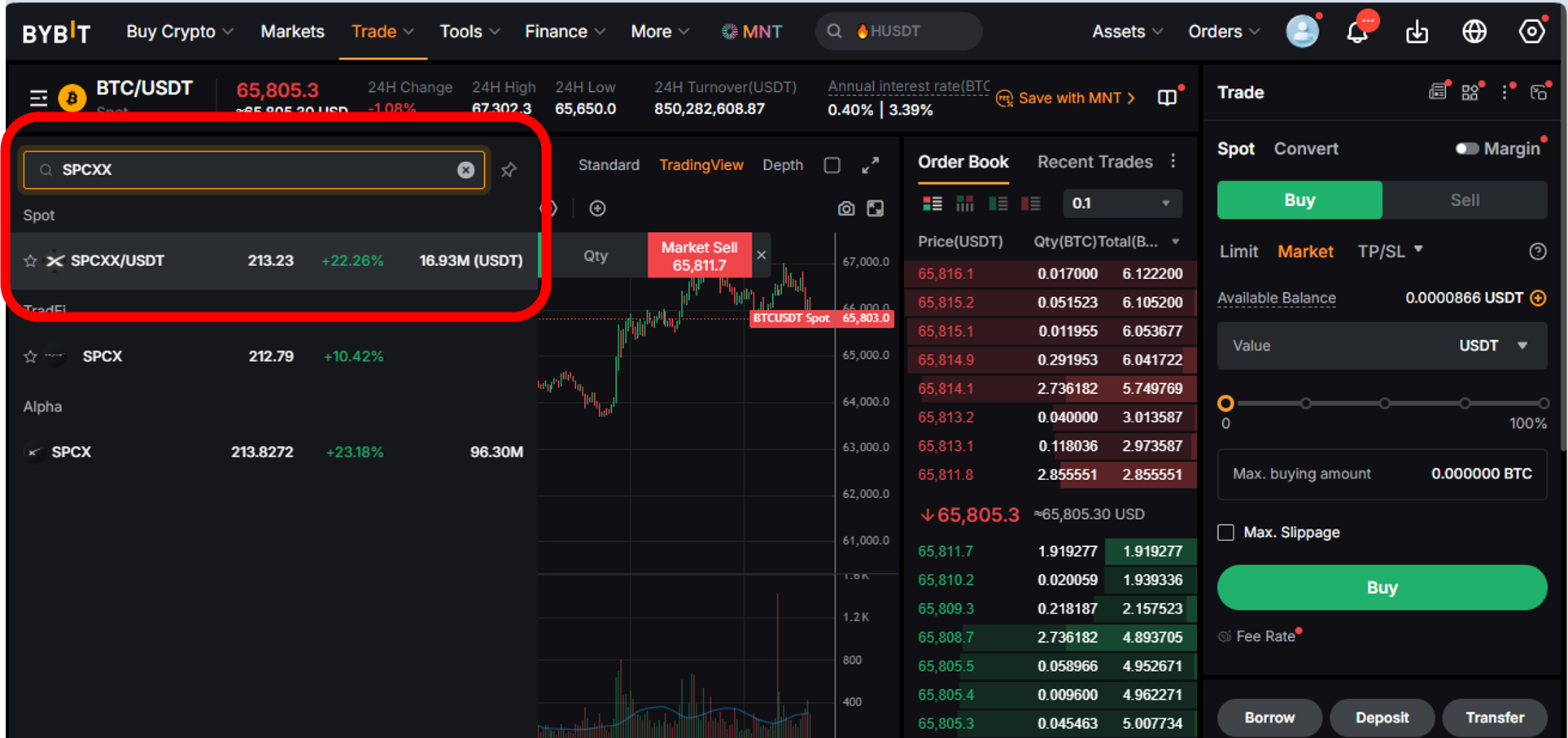
xStock on Bybit Spot (SPCXX):
Tokenized stock backed 1:1 by the underlying SPCX share, issued by Backed Assets (JE) Limited
No leverage; held directly in your Spot account
Settles on-chain via Solana (SOL); smart contract risk applies
To start using xStock on Bybit Spot, go to the Spot section on the Bybit homepage and search for SPCXX in the trading interface
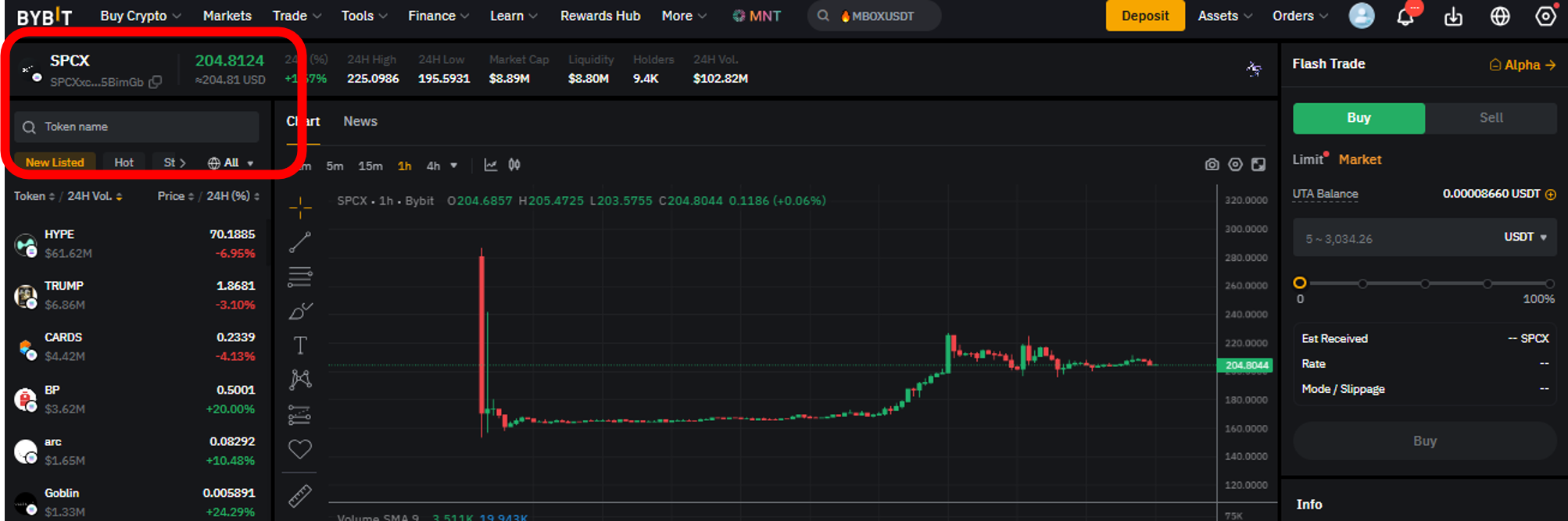
On-chain token on Bybit Alpha (SPCX):
Solana-based token traded natively within your Unified Trading Account (UTA)
No external wallet required; accessible directly through the Bybit Alpha interface
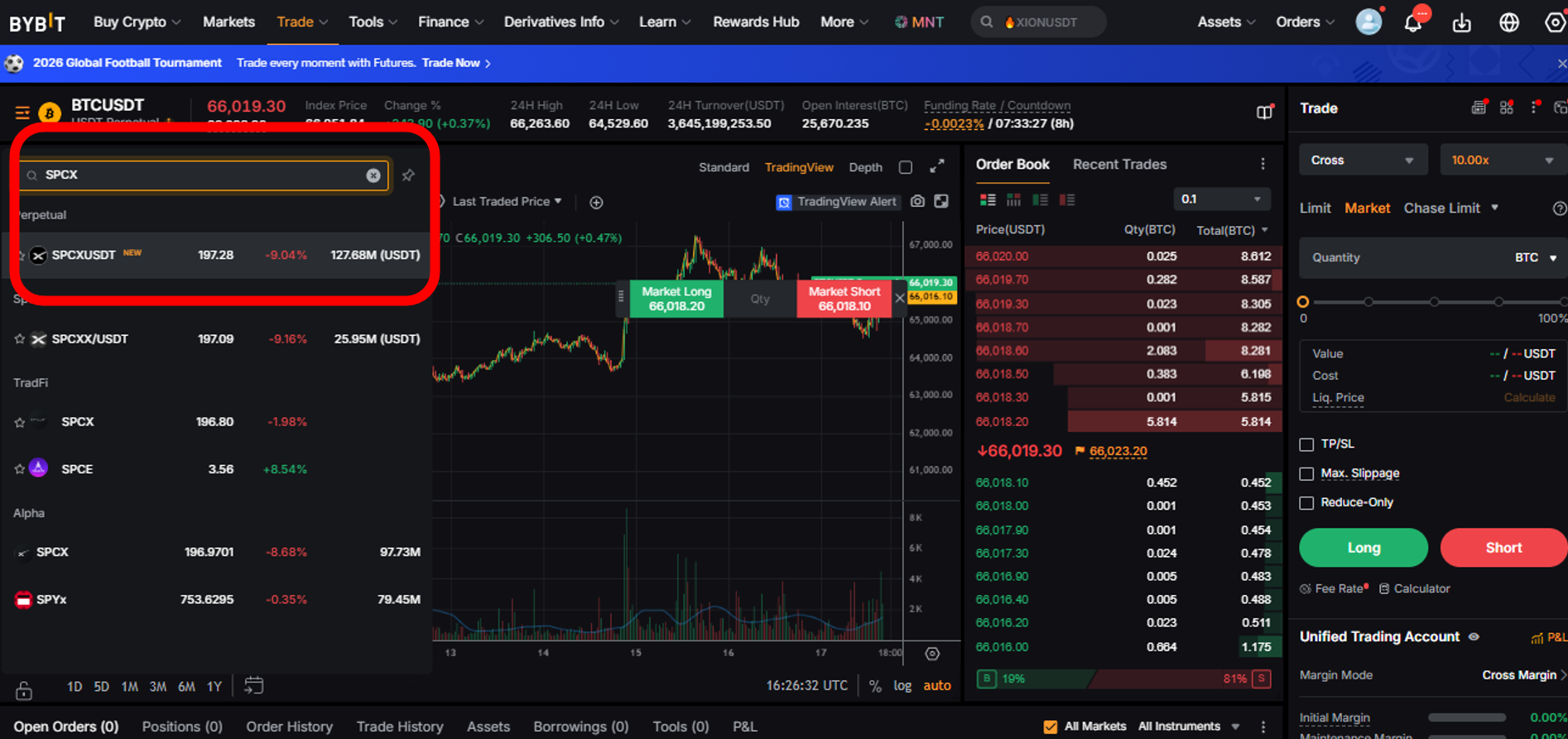
Perpetual contract on Bybit TradFi (SPCXUSDT):
Up to 10x leverage, tradeable long or short
Runs 24/7, with funding fees settled every eight hours
Tether (USDT) collateral; suits traders who are seeking leveraged directional exposure
To start trading, go to the Futures section of the platform and search for the SPCXUSDT Perpetual contract
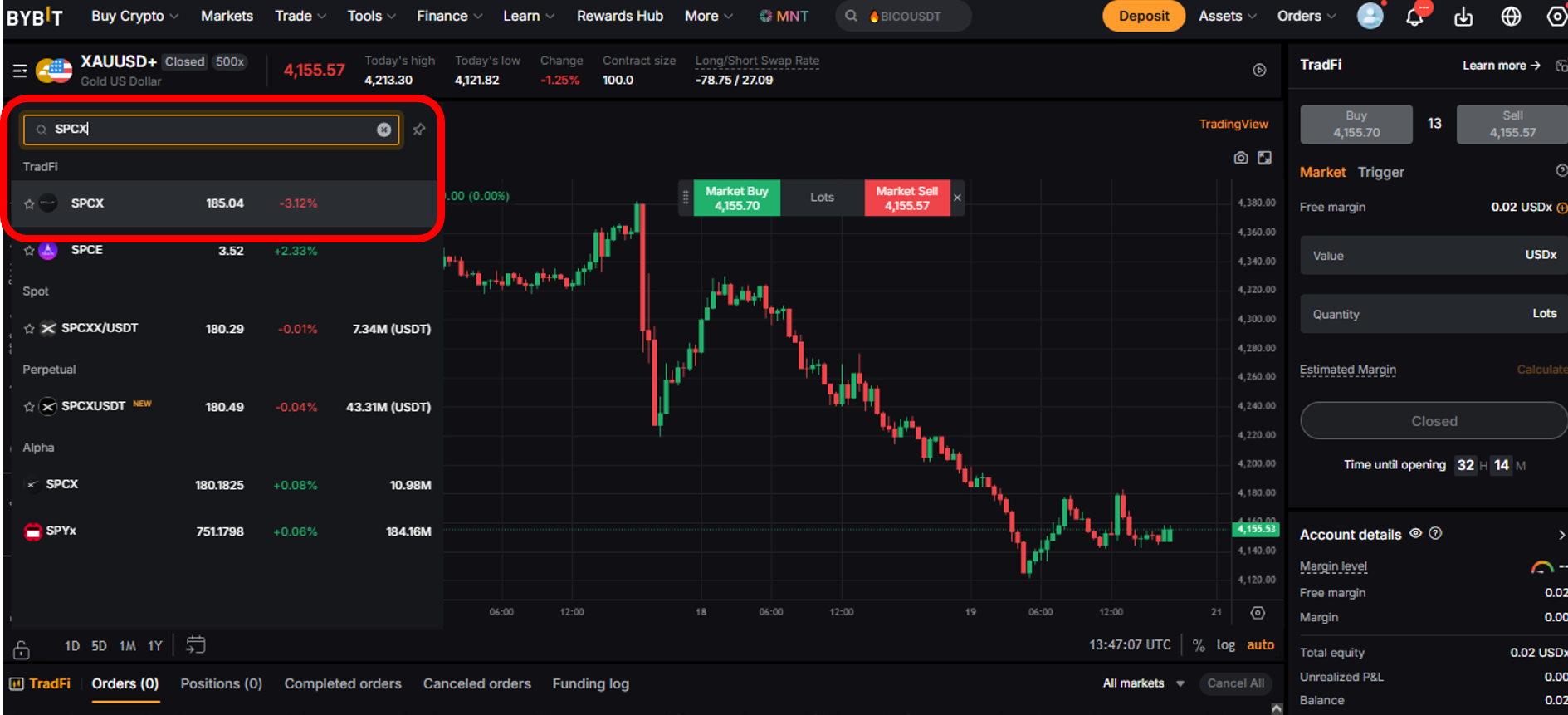
Stock CFD on Bybit TradFi:
Leveraged CFD available to verified users
Operates during session-based trading hours, not 24/7
USDT collateral; suited for directional exposure without direct asset ownership
Visit Bybit’s TradFi section, select the Stocks tab and search for the TradFi ticker of SPCX
For yield-focused exposure, the SPCX-USDC liquidity pool on Bybit Alpha Farm allows you to earn fee income via liquidity provision. Returns are variable and impermanent loss risk applies.
Closing thoughts
SpaceX's Jun 12, 2026 debut was the largest IPO on record. After a first-week surge past $200 per share, the stock has settled for a more grounded price of $156, with a market cap of around $2 billion. Just 12 days after the historic IPO, SpaceX is now the seventh-largest public company globally.
Strong institutional demand and imminent inclusion in the Nasdaq-100 provide healthy early support for this stock going into the second half of 2026. The key bearish factor, however, is the gap between a $2.06 trillion valuation and an annual revenue of $18.7 billion. As such, strong Starlink growth and a credible Starship commercialization timeline are now crucial for SPCX’s longer-term prospects.
#LearnWithBybit