


Nvidia stock outlook in 2026: How to trade NVDA on Bybit

NVIDIA (NVDA) is a leading AI infrastructure and accelerated computing provider. For investors, the stock acts as a direct play on data center growth, which is currently driven by hyperscaler expansions, sovereign AI projects and the computing needs of advanced inference models.
As the tech industry pivots toward generative AI, specialized chips have become essential hardware. In this article, you’ll learn more about NVIDIA's recent market performance, the bullish and bearish factors impacting NVDA's 2026 outlook and how to trade NVDA stock on Bybit.
Key Takeaways:
NVIDIA continues to dominate the AI hardware space. Its Q4 FY2026 revenue hit a record $68.1 billion, driven largely by data center demand and the transition to the new Rubin platform.
Despite strong financial performance and a $1 trillion revenue pipeline through 2027, the company faces potential headwinds from zero data center revenue in China and surging operating expenses.
On Bybit, users can trade NVDA 24/7 through Bybit Spot/Alpha, TradFi Perpetual Contracts and Bybit TradFi using USDT as margin.
NVIDIA (NVDA) market performance in 2026
Market cap: $535 trillion
YTD return: +18.41%
1Y return: +64.34%
52-week high/low: $236.54/$129.16
Analyst median 12-month price target: $275 (potential 12-month upside of 23%)
Wall Street ratings: 76 Buy | 3 Hold | 1 Sell (out of 80 analysts) — overwhelming "Buy" consensus
All-time ROI: +504,665%
Following the initial surge of the AI sector, NVIDIA continues to achieve unprecedented milestones. The chipmaker successfully breached both the $4 trillion and $5 trillion market capitalization barriers throughout 2025 and early 2026. This upward momentum culminated in an exceptional Q4 FY2026 earnings report on Feb 25, 2026. The latest financial data cemented its multitrillion-dollar status, demonstrating the persistent demand for enterprise computing power across various global industries.
The market consistently rewards the company’s execution capabilities. With an extraordinary all-time return on investment surpassing 504,000%, NVDA maintains robust daily trading volumes and deep liquidity. Financial institutions echo this positive sentiment, as 76 out of 80 Wall Street analysts maintain a "Buy" rating on the stock. This widespread consensus, combined with a median 12-month price target projecting a 23% upside, keeps the company firmly positioned at the forefront of the global equities market.
NVDA stock outlook in 2026
The 2026 trajectory for NVIDIA hinges on a complex balance of competing factors. Unprecedented hardware demand is fueling extreme growth, while escalating corporate expenses and stringent geopolitical trade rules have introducee noticeable friction.
Bullish factors
The core financials of the organization highlight its absolute sector dominance. During Q4 FY2026, total revenue reached a staggering $68.1 billion, representing a 73% increase year-over-year. Revenue from data centers alone accounted for $62.3 billion of that figure. This momentum easily carried into the new fiscal year, as Q1 FY2027 revenue guidance of $78 billion comfortably surpassed the $72.8 billion anticipated by market analysts.
Looking ahead, the cumulative revenue pipeline for the Blackwell and Rubin architectures now exceeds $1 trillion through 2027. The upcoming next-generation Vera Rubin platform remains on schedule for production shipments in the second half of 2026, offering enterprise customers a 10x reduction in inference costs.
Beyond corporate clients, international governments are accumulating hardware at a rapid pace. Sovereign AI spending tripled to $30 billion in FY2026. This massive influx of capital generated $97 billion in free cash flow for the fiscal year, allowing NVIDIA to return $41 billion to shareholders. Furthermore, gross margins remain remarkably steady at roughly 75%, an exceptional metric for an enterprise operating within the hardware manufacturing space.
Bearish factors
While the financial metrics cited above reflect significant expansion, there are some forces that threaten to disrupt NVIDIA’s operations. Currently, NVIDIA projects zero data center revenue from China in its outlook. The company cannot access this historically crucial market, due to strict US export restrictions. Furthermore, Beijing is actively pushing for domestic technological self-sufficiency, effectively halting or blocking deliveries of localized units, such as the H20 and H200 chips. Geopolitical friction and ongoing export controls remain the most significant wildcards for the company.
Internal financial pressures are also mounting. Operating expenses have surged significantly, with Q1 FY2027 OpEx guidance reaching approximately $7.5 billion. This figure far outpaced the $5.3 billion predicted by Wall Street analysts. Additionally, the impending transition from Blackwell to the newer Rubin platform could trigger temporary margin compression as new component inventory builds up across the supply chain.
Finally, with 76 out of 80 analysts’ “Buy” ratings, market expectations are currently sky-high. Because the stock trades at premium valuation multiples, any slight misstep in production execution or a minor miss on future earnings guidance could negatively impact its share price.
What retail investors need to know
NVIDIA stands out as the reigning king of AI hardware. Its processing chips have set the industry gold standard, leaving rival semiconductor manufacturers playing a multiyear game of catch-up. Since the company boasts an order pipeline exceeding $1 trillion, it possesses a level of revenue predictability rarely seen in technology enterprises of this scale.
However, its primary vulnerability doesn’t stem from direct competitors: the main risk depends entirely upon the spending habits of major technology conglomerates. NVIDIA acts as the primary supplier for the infrastructure buildout, meaning that any reduction in capital expenditure by hyperscalers like Amazon, Google and Microsoft would immediately impact its bottom line.
It’s also worth noting that not all tech giants participate in this massive data center hardware accumulation. Apple successfully bypassed the infrastructure arms race by focusing on executing artificial intelligence processes directly on consumer devices.
How to trade NVDA on Bybit
Bybit offers three different ways to gain exposure to NVIDIA's market movements directly using USDT as margin. Depending upon your trading preference, simply complete either KYC Level 1 or Level 2 verification to get started.
Bybit Alpha
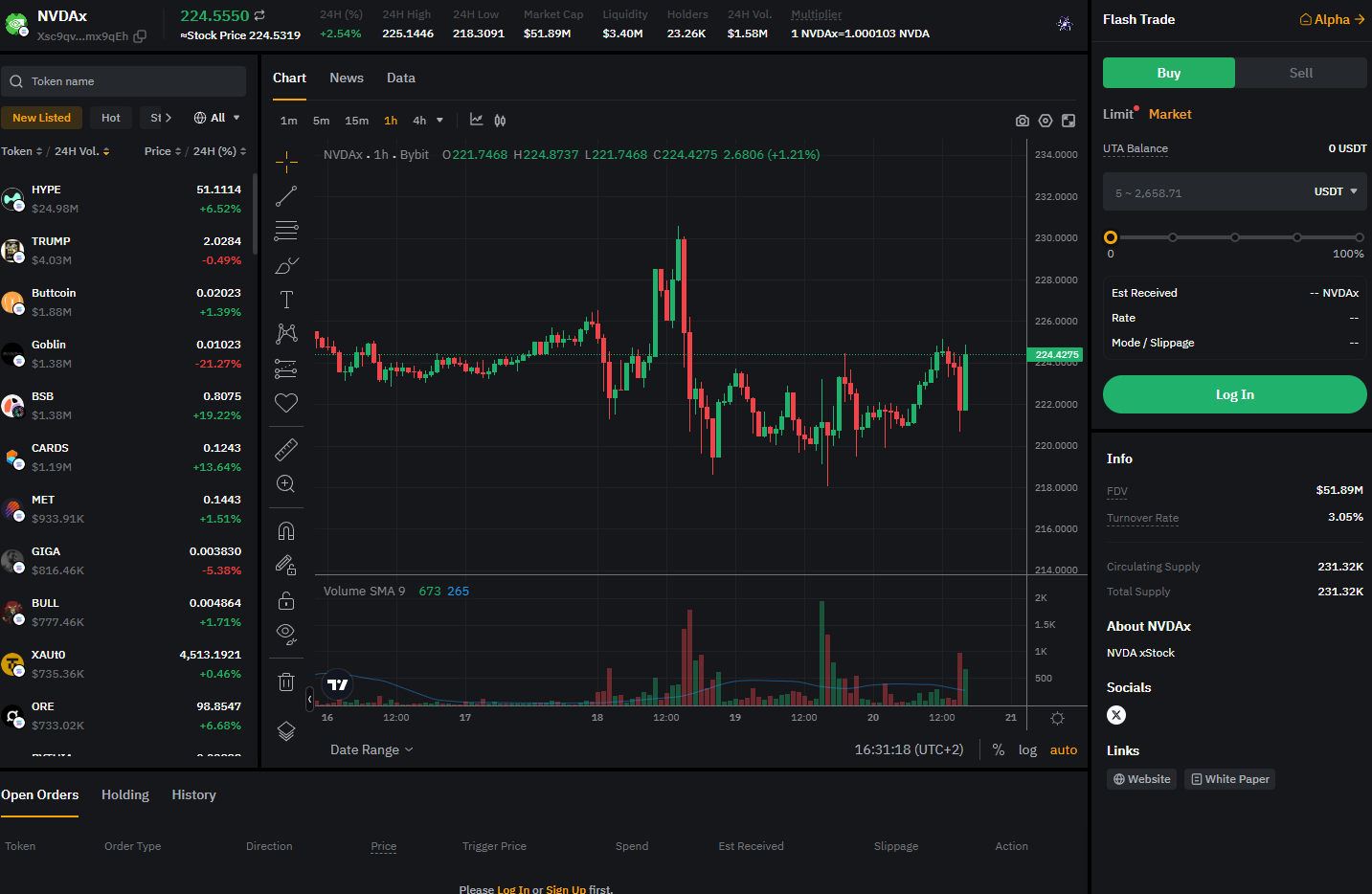
NVDA can be traded as a tokenized xStock on Bybit Alpha as follows:
Log in to your Bybit account, and navigate to Bybit Spot or Bybit Alpha.
Ensure you hold USDT in your Unified Trading Account (UTA).
In the Trade menu, use the search bar to find the NVDAx ticker.
Use the trading widget on the right to select whether to Buy or Sell the stock, then select your order type (Limit or Market) and the order quantity.
Click on Buy or Sell to confirm the transaction.
TradFi Perpetual Contracts
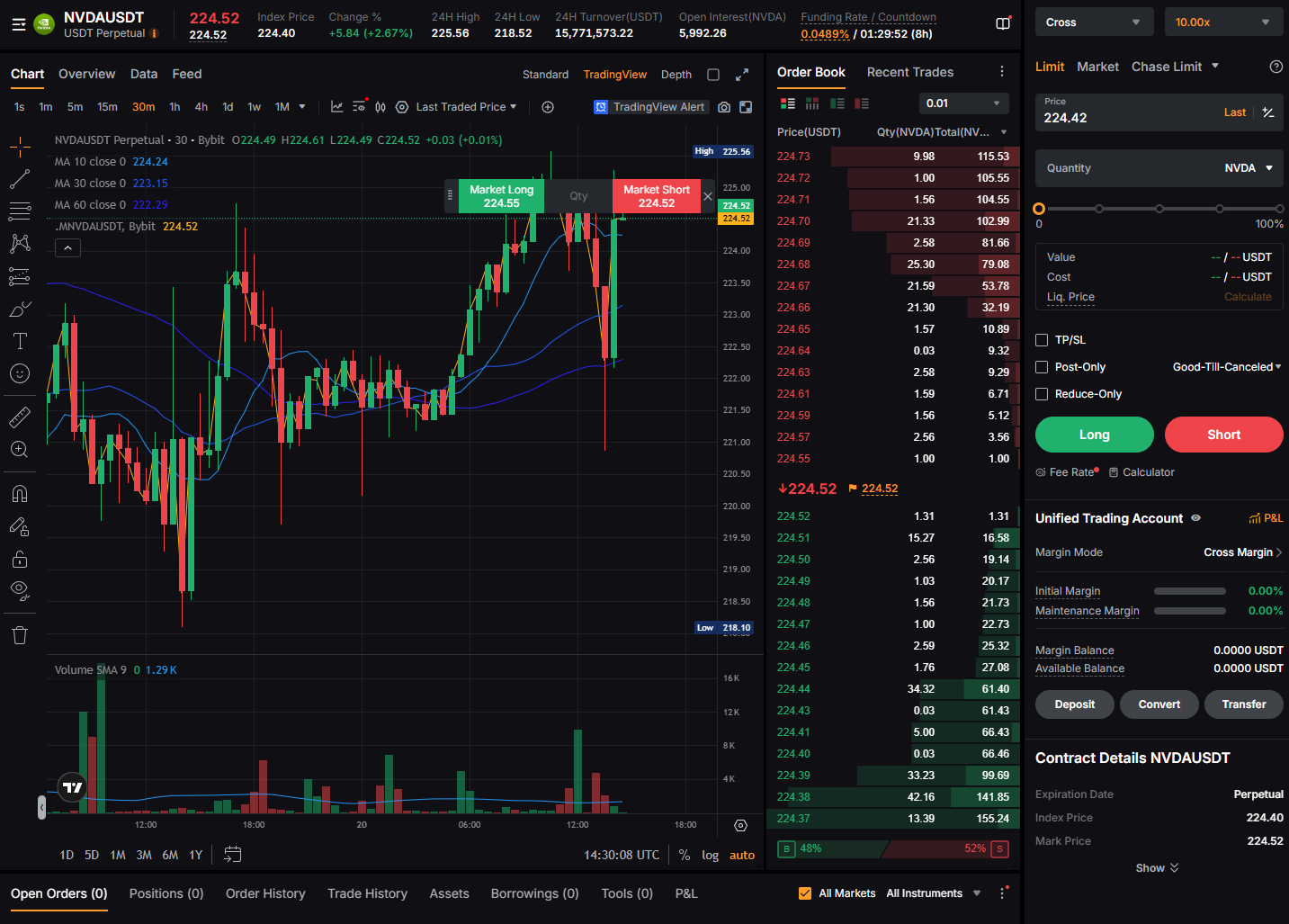
Trade NVDA as a USDT-settled TradFi Perpetual Contract with leverage and 24/7 availability on the NVDAUSDT trading page as follows:
Fund your Unified Trading Account with USDT.
Search for the NVDAUSDT ticker in the Trade tab.
Adjust your leverage settings according to your personal risk management strategy.
Input your order details, then click on Long or Short to execute your trade.
Bybit TradFi
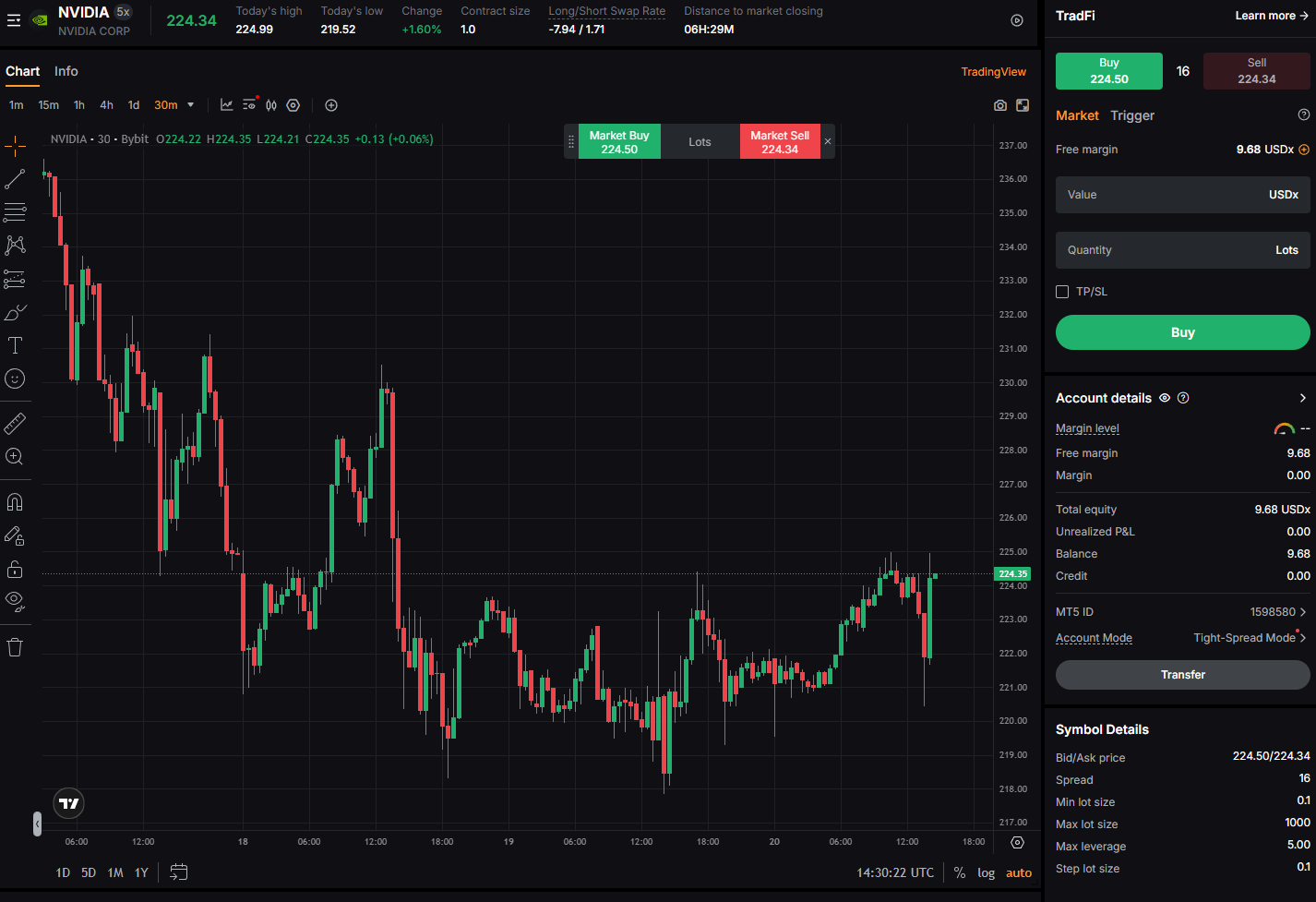
You can trade NVDA as a stock CFD on Bybit TradFi. To do so, follow these simple steps:
After transferring USDT to your TradFi Account, choose NVIDIA from the available Stocks under the Trade → TradFi menu.
Set the direction of the trade (Buy or Sell), the order quantity and other order parameters.
Initiate the trade by clicking on Buy or Sell.
The verdict
As 2026 progresses, NVIDIA commands an extraordinary revenue pipeline while maintaining dominance over the AI hardware sector. The ongoing rollout of the Rubin architecture and sovereign tech investments serve as primary growth engines.
Conversely, market participants must monitor rising operational costs and strict export limitations impacting the Chinese market. Ultimately, the trajectory of the stock remains tethered to the capital expenditure budgets of major cloud providers.
If you’re ready to capitalize on NVIDIA's market movements, you can trade NVDA today across Bybit Alpha, TradFi Perpetual Contracts or Bybit TradFi. Create a Bybit account to get started!
#LearnWithBybit