


TradFi CFDs vs. TradFi Perpetual Contracts on Bybit: Understanding the key differences

Bybit now offers two distinct ways to trade traditional financial assets without owning them. On the surface, TradFi Contracts for Difference (CFDs) and TradFi Perpetual Contracts look similar: both use USDT collateral, and both provide exposure to stocks, indices, and commodities. However, they are not the same product under different names.
The two instruments are built on fundamentally different infrastructures and operate under different trading mechanics. Understanding those differences is the first step toward choosing the product that fits your strategy.
Key takeaways
TradFi CFDs and TradFi Perpetual Contracts both let you speculate on traditional financial assets using USDT, but they run on fundamentally different infrastructures.
CFDs operate on a dedicated broker-style platform with lot-based execution and daily swap fees. Perpetuals are fully integrated into Bybit's crypto derivatives engine and use funding rates.
CFDs suit swing traders and traditional broker users who prefer 24/5 markets. Perpetuals suit crypto-native traders, scalpers, and those who want 24/7 market access.
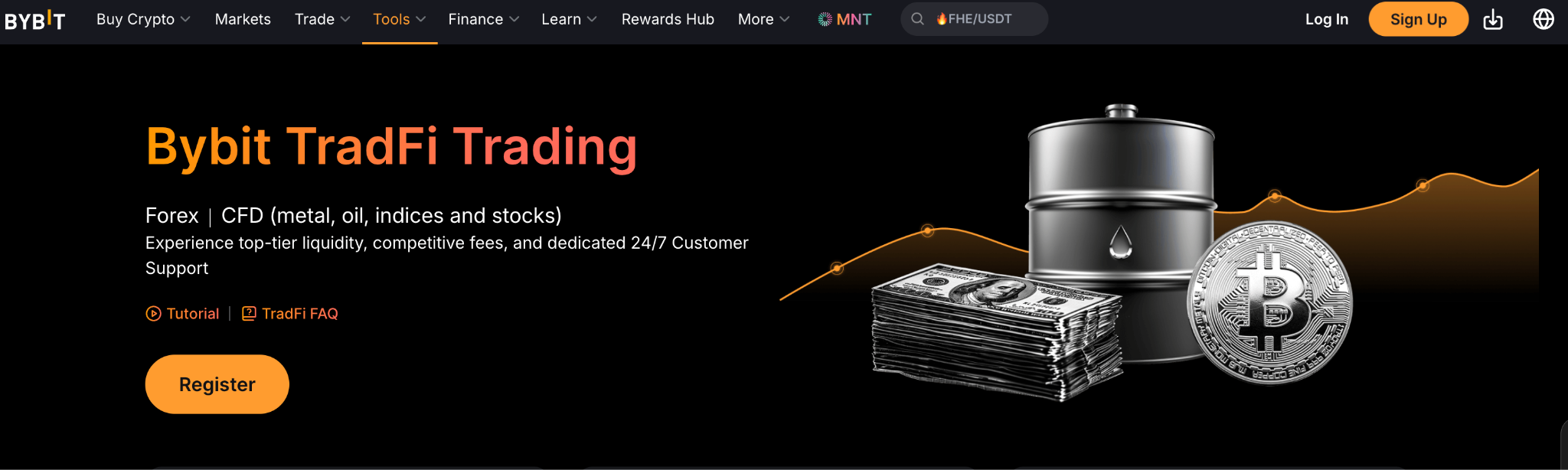
What are TradFi CFDs on Bybit?
A Contract for Difference (CFD) is a derivative instrument that lets you profit from price movements without owning the underlying asset. When you buy or sell a CFD, you agree to exchange the difference in the asset's price between the time the contract opens and the time it closes.
On Bybit, TradFi CFDs operate on a dedicated trading interface that behaves like a traditional forex or CFD broker. Account balances are tracked in a unified internal display unit, and trades are executed using standard lot sizes. The collateral used is USDT, which bridges the familiar brokerage format with crypto infrastructure.
This makes TradFi CFDs a natural fit for traders who already have experience on broker-style platforms and want to apply that knowledge within the Bybit ecosystem.
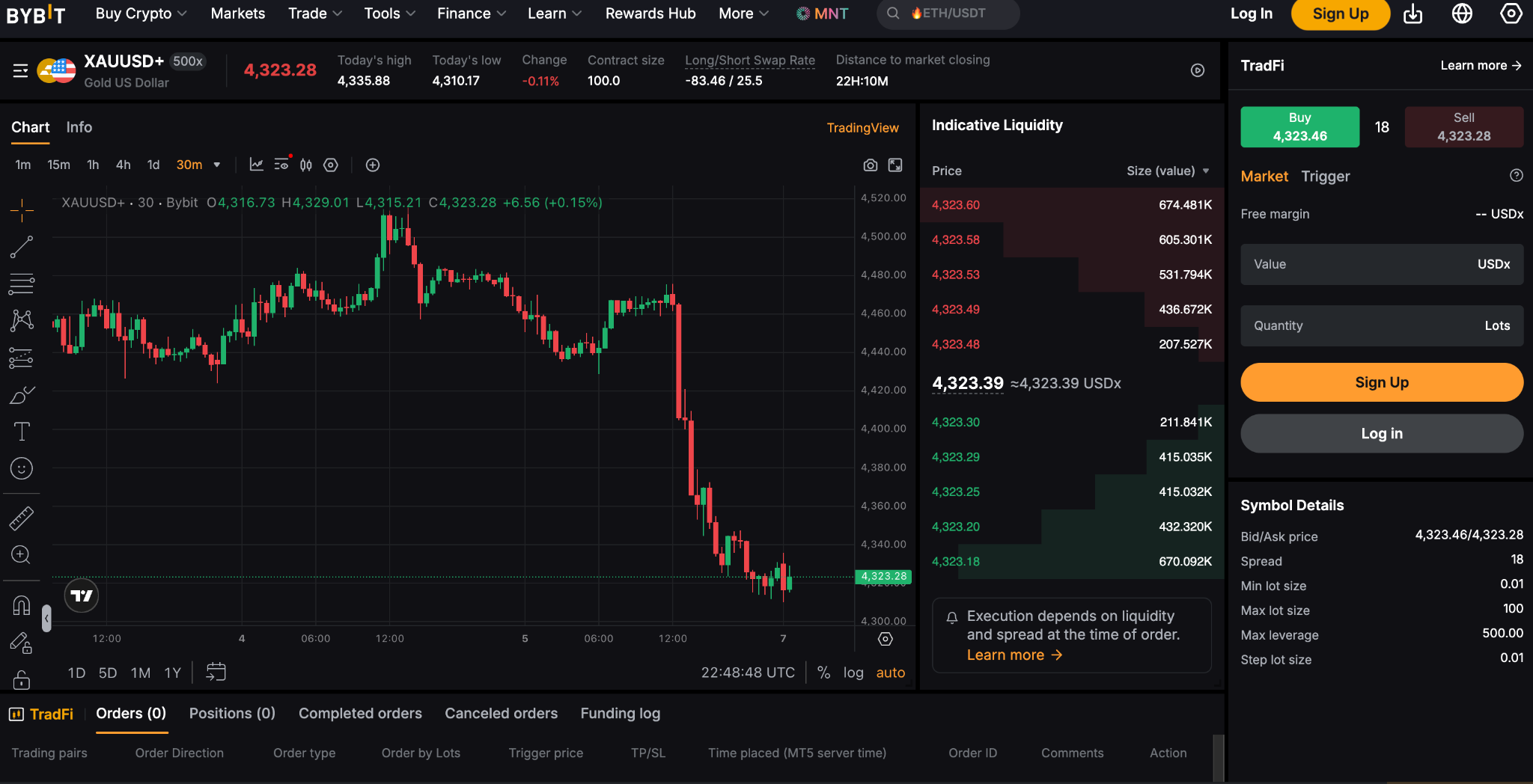
What are TradFi Perpetual Contracts on Bybit?
A perpetual contract is a type of futures contract with no expiry date. It tracks the price of an underlying asset indefinitely, with a funding rate mechanism keeping the contract price aligned with the index price.
TradFi Perpetual Contracts apply this crypto-native structure to traditional financial assets such as stocks, indices, and commodities. On Bybit, they are fully integrated into the main Derivatives interface and follow the same engine, ledger structure, and cross-margin or portfolio-margin rules as standard crypto futures pairs such as BTCUSDT.
For traders already active on Bybit's derivatives platform, TradFi Perpetuals require no platform switch. The tools, margin system, and fee structure are identical to what they already use.
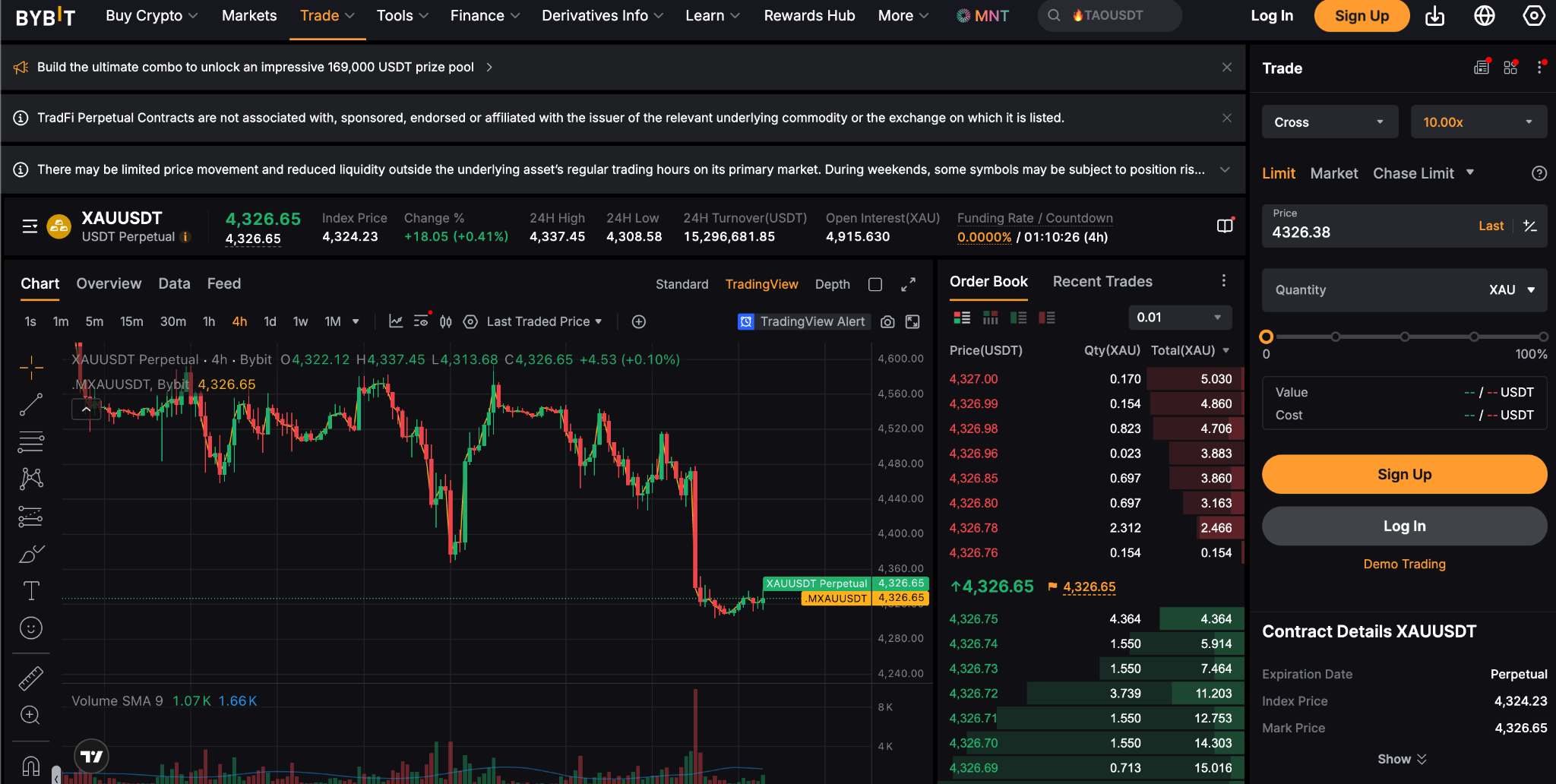
Key differences between TradFi CFDs and TradFi Perpetual Contracts
Product infrastructure and trading interface
TradFi CFDs operate on Bybit's dedicated CFD pages. The infrastructure mirrors a traditional brokerage: account balances use a unified internal display unit, and orders are placed in standard lot sizes. The experience is designed to feel familiar to traders coming from conventional forex or equity CFD platforms.
TradFi Perpetual Contracts, by contrast, live inside Bybit's main Derivatives interface. They share the same matching engine, ledger structure, and margin system as all other crypto futures on the platform. A trader who knows how to manage a BTCUSDT perpetual position will find the mechanics identical.
Trading hours
TradFi CFDs are available 24 hours a day, 5 days a week — Monday through Friday — in line with traditional market conventions. Trading pauses over weekends when underlying financial systems are closed.
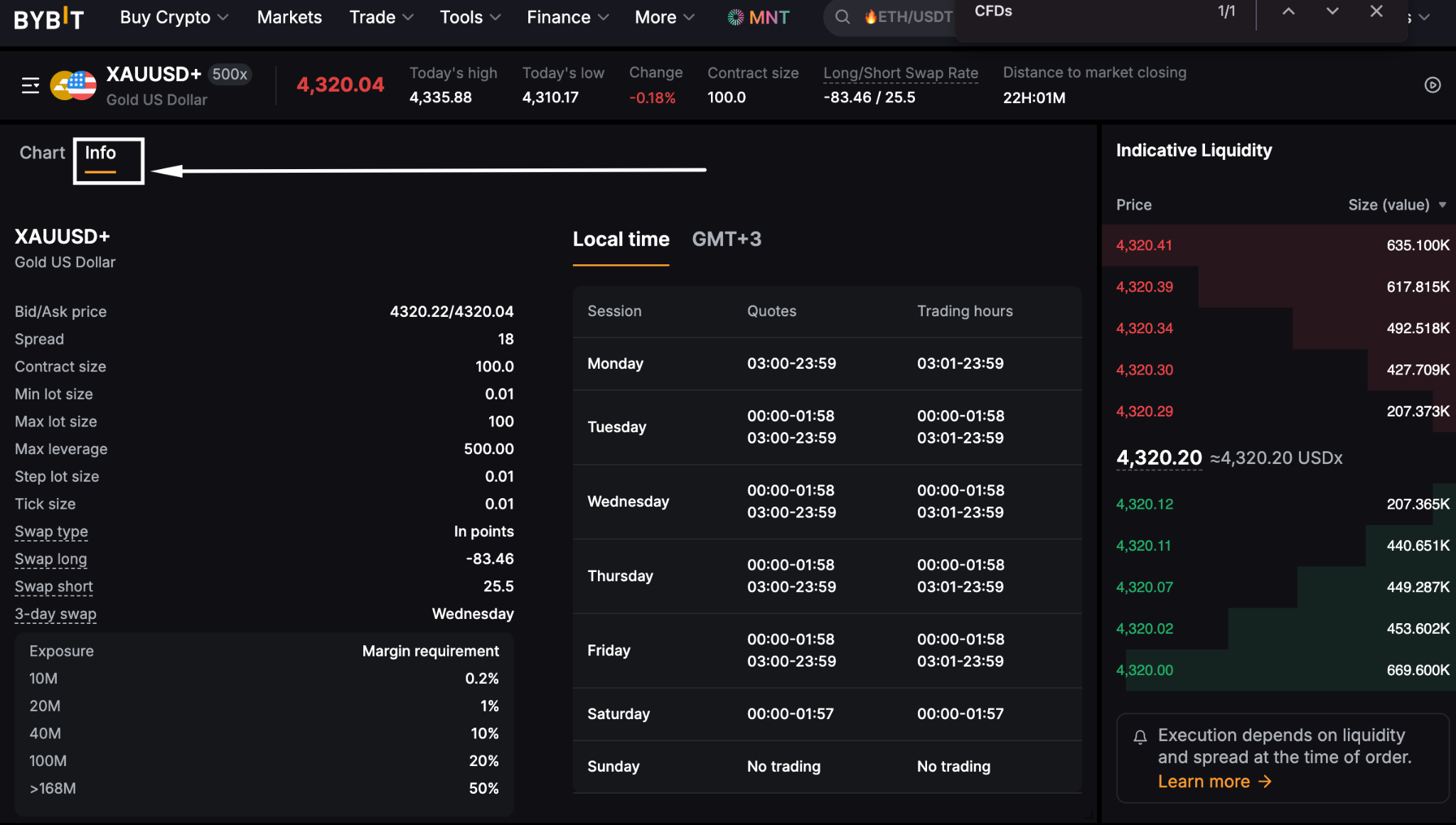
TradFi Perpetual Contracts offer continuous 24/7 trading. This matters when significant news breaks outside standard market hours. Traders can respond to corporate developments, geopolitical events, or commodity supply shocks on a Saturday afternoon, well before traditional exchanges reopen Monday morning.
Holding costs: swap fees vs. funding rates
The two products handle overnight position costs in completely different ways.
TradFi CFDs use swap fees. If you hold a position past the broker server time — typically 00:00 — you are charged or credited a daily swap fee, calculated in points or percentages. On a specific weekday, a 3-day swap rate applies to cover the weekend closure period when markets are inactive, but positions remain open.
TradFi Perpetual Contracts use a crypto funding rate mechanism. Long and short position holders pay or receive funding fees at scheduled intervals, typically every few hours. This process keeps the derivative price aligned with the underlying index price and entirely mirrors how standard crypto perpetuals operate.
Fee structures
TradFi CFDs offer two account modes. In Zero-Fee Mode, no direct commission is charged — instead, the cost is embedded in the spread between the buy and sell price. In Commission Mode, a fixed charge applies per lot traded. For stocks, this is $0.02 per lot, subject to a $0.20 minimum order fee.
TradFi Perpetual Contracts use Bybit's standard taker/maker fee model, the same structure applied across all crypto derivatives on the platform. Any VIP tier discounts accumulated through your derivatives trading activity apply automatically.
Leverage
TradFi CFDs typically cap leverage at around 5x for standard stock products, consistent with traditional brokerage risk parameters.
TradFi Perpetual Contracts use a dynamic leverage risk-limit model, allowing for higher leverage limits that adjust based on position size. The structure is identical to Bybit's crypto futures leverage system.
Comparison summary
Feature | TradFi CFDs | TradFi Perpetual Contracts |
|---|---|---|
Platform | Dedicated CFD pages | Main Derivatives interface |
Infrastructure | Broker-style | Crypto-native engine |
Trading hours | 24/5 (Mon–Fri) | 24/7 |
Holding costs | Daily/3-day swap fees | Funding rates (every few hours) |
Fee model | Spread-based or commission per lot | Taker/Maker + VIP discounts |
Leverage | Up to ~5x (stocks) | Higher, dynamic risk-limit model |
Margin system | Unified internal display | Cross-margin/portfolio margin |
Order sizing | Standard lots | Contract-based (crypto style) |
Which product is right for you?
Both instruments achieve the same goal: USDT-collateralized exposure to traditional financial assets. The right choice depends on your trading rhythm, platform familiarity, and your preferred position cost management.
TradFi CFDs may be a better fit if you are a:
Swing trader holding positions over multiple days who can plan around predictable swap costs.
Traditional CFD or forex trader already comfortable with broker-style platforms and lot-based execution.
MetaTrader user looking for a familiar interface within Bybit.
Multi-day position holder who wants clear, scheduled holding cost calculations.
Trader seeking structured lot-based order entry rather than contract-based sizing.
TradFi Perpetual Contracts may be a better fit if you are a:
Crypto-native trader already using Bybit's Derivatives interface who wants exposure to traditional assets without switching platforms.
Day trader or scalper who benefits from the taker/maker fee model and VIP tier discounts.
Weekend trader who wants the ability to act on breaking news before traditional markets open.
Portfolio margin user consolidating multiple derivative positions under one margin framework.
Trader seeking higher leverage options through a dynamic risk-limit model.
User who wants 24/7 access to traditional asset prices with no weekly gap.
The bottom line
TradFi CFDs bring traditional brokerage mechanics to crypto users: lot-based execution, swap-based holding costs, and a dedicated broker-style interface. TradFi Perpetual Contracts apply crypto-native infrastructure to traditional financial assets: perpetual funding rates, dynamic leverage, and full integration with Bybit's existing derivatives ecosystem.
Neither product is inherently superior. The decision comes down to the trading environment you are most comfortable in and the position-management approach that aligns with your strategy. If you prefer the structure of traditional brokerage platforms, TradFi CFDs provide a familiar home. If you are already operating within Bybit's derivatives engine, TradFi Perpetuals extend that system to cover traditional markets as well.
#LearnWithBybit