


Bybit Options Weekly Review: May 12–May 18

Opening Snapshot | The Week in One Line
Last week we chose not to chase the top and not to build positions — this week the market delivered the most direct validation possible: BTC failed at the 200-day moving average ($82,228) for the fifth consecutive time, dropped over 6% to a low of $76,960, and is now fighting to hold $77,000. April CPI came in at 3.8% (a three-year high), the 10-year Treasury yield broke through the 4.5% warning line, U.S. equity options expiry triggered a "long-on-long squeeze," and CME FedWatch now prices a 57%+ probability of a Fed rate hike by end-2026. The CLARITY Act's historic passage through the Senate Banking Committee was completely absorbed by macro headwinds. Waiting was the right call last week. |
I. Weekly Market Recap
Weekly Price Action (Bybit Platform Data, updated May 18, 0AM UTC):
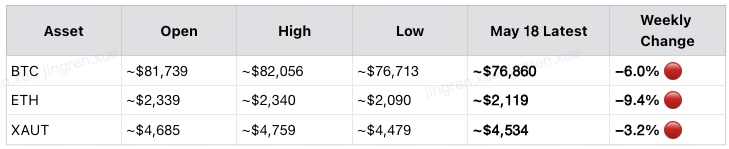
⚠ All three assets closed lower this week. BTC touched a low of $76,960 in the early hours of May 18 UTC before rebounding to fight for the $77,000 level, where it remains in a tug-of-war. XAUT declined -3.3%, breaking the prior two weeks' narrative of gold outperforming crypto — the pressure from Treasury yields breaking above 4.5% has now spread to all asset classes.
READ MORE (published Mon, May 18): Here's why soaring bond yields hurt stocks, cryptos
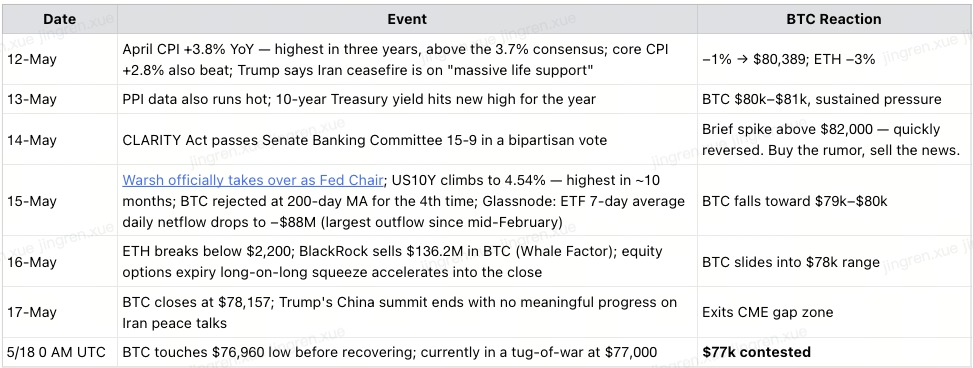
Event Timeline:
II. Last Week's Call, Validated
Last week's three core signals all confirmed this week:

On the CLARITY Act being absorbed by macro: The 15-9 bipartisan vote is one of the most important regulatory milestones of this cycle. But BTC briefly surged above $82,000 on the news and immediately reversed. Regulatory clarity is a long-term structural positive — but in a high-inflation, high-rate macro environment, it cannot override the pressure from rising yields. That is the most important market lesson of this week.
III. Four Key Macro Signals
Signal One: BTC Technical — Fifth Rejection at 200-Day MA, Now Fighting $77k
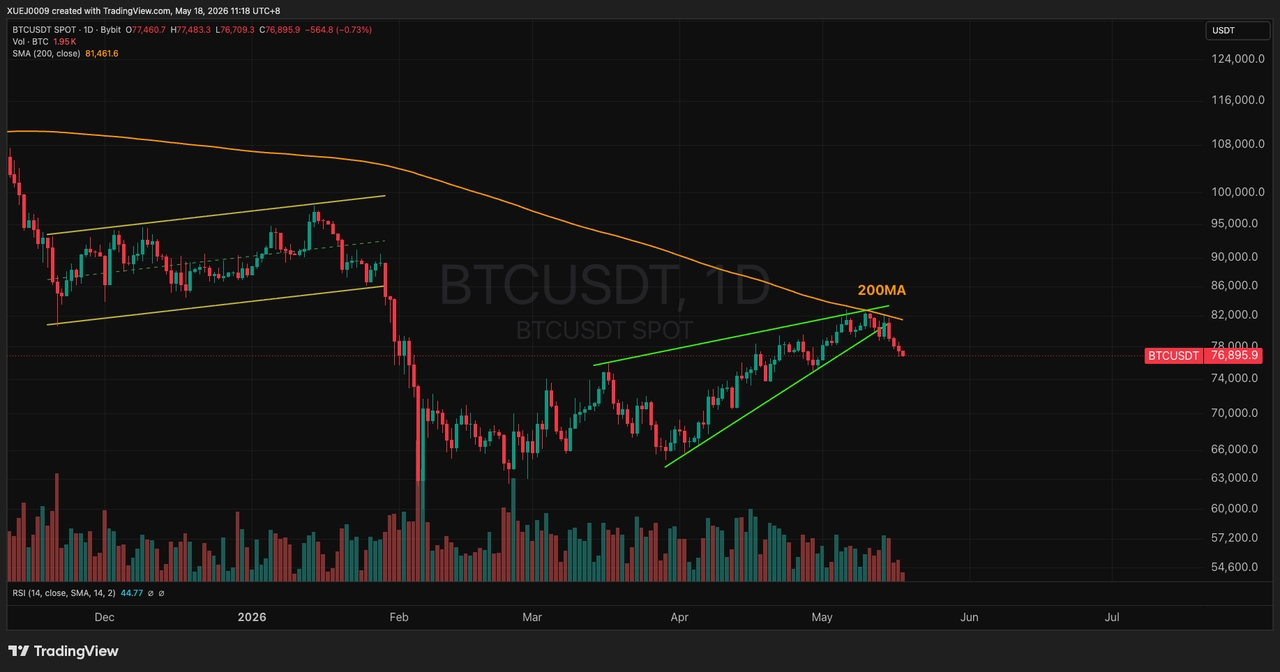
BTC experienced 4 consecutive failed breakout attempts at the $82,000 resistance zone — a cluster that concentrates the average ETF cost basis, the 200-day moving average, and the CME gap upper boundary. This week BTC formally broke below the CME gap zone ($79,500–$83,500).
$77,000 is now the critical near-term observation level:
Holds $77,000 and bounces: Institutional buyers are absorbing at this level; a short-term bottom may be forming; near-term target $79,500
Loses $77,000 on a confirmed close: Analysts warn that a break below this level, with open interest still elevated, could trigger a deleveraging phase — next structural target $74,914–$75,000
Signal Two: U.S. Equity "Long Liquidation Cascade" — Options Expiry Stampede, Extreme Positioning
May 16 (Friday) was an equity options expiry day that produced a textbook long-on-long liquidation event:
A large volume of call options were force-closed before expiry, generating a negative delta hedging effect from market makers that mechanically accelerated the sell-off into the close. Longs caught at the highs were forced to stop out, creating a cascade of involuntary selling.
The deeper structural concern is the crowding: according to the latest Goldman Sachs Prime Book Weekly Report on May 16, 2026, hedge fund gross positioning in the technology sector is near a five-year high, with long positions sitting at the 99th percentile. When capital is this concentrated, the slightest catalyst can trigger systematic deleveraging.
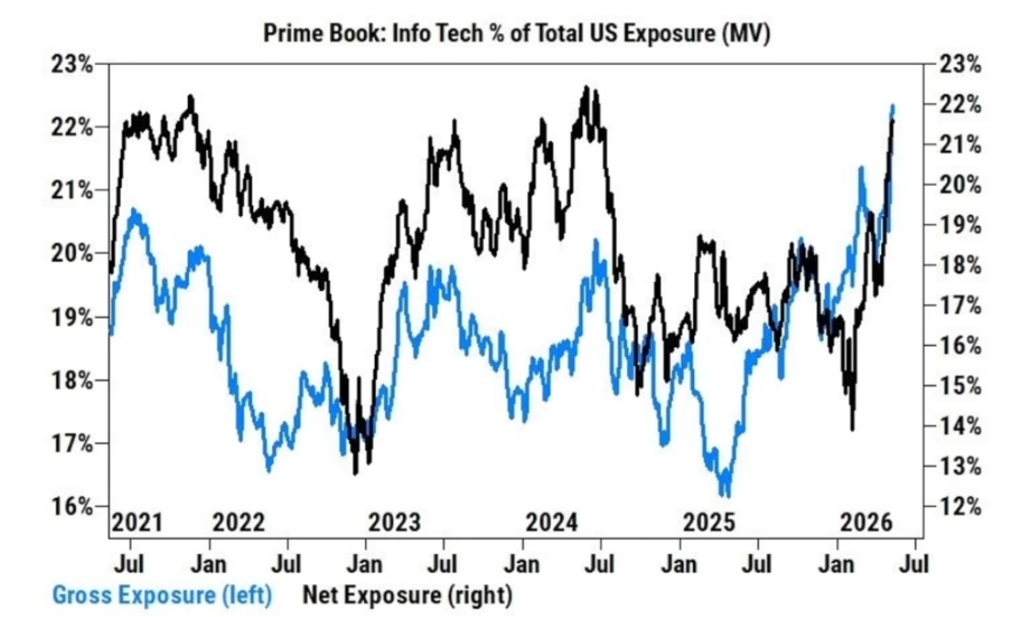
Watch the S&P 500 and Nasdaq key support levels closely going into next week. Equity market stability (as a barometer of broader risk sentiment) is a prerequisite for ETF inflows — if equities continue to weaken, crypto ETF outflows will expand further, and BTC's institutional support floor will shift lower.
Signal Three: US10Y Breaks 4.5% — The Warning Line
The 10-year U.S. Treasury yield climbed to 4.54% on May 15 — its highest level in approximately 10 months. April CPI confirmed inflation running at 3.8% year-over-year — the highest in three years — further pushing back expectations of any 2026 rate cut.
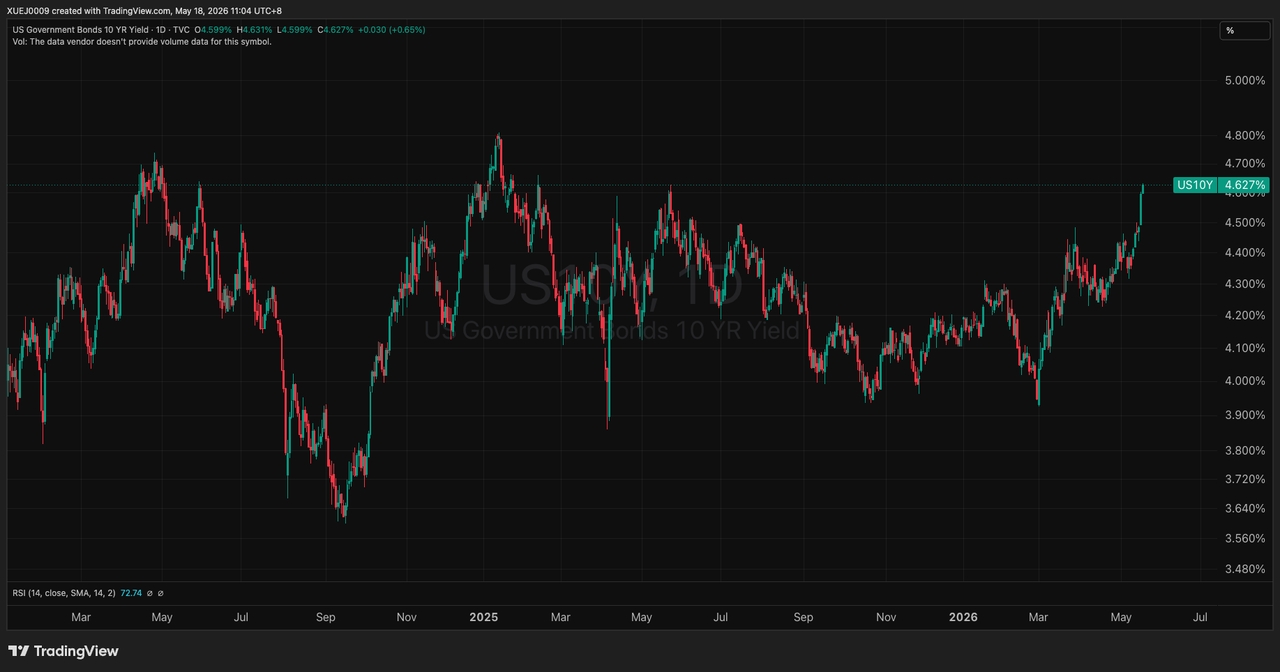
4.5% is a critical technical warning line — it corresponds to the downtrend resistance in Treasury yields that has been in place since 2023 (following the lower highs since 4.99% in Oct 2023, then 4.79% in Jan 2025):
If yields stabilize above 4.5%: The downtrend is formally broken; markets will reprice to "higher for longer" Fed rates as the new baseline
If yields approach 5%: Risk assets face systemic turbulence — BTC, as a zero-yield asset, is one of the first in line for institutional reallocation out
Note that spot Bitcoin and 10-year yields have a strong negative correlation of 0.6 over the past 5 years, on a rolling 5-day period.
Signal Four: CME FedWatch — Rate Hike Probability Quietly Climbs to 50%+
Based on the latest CME FedWatch Tool data:
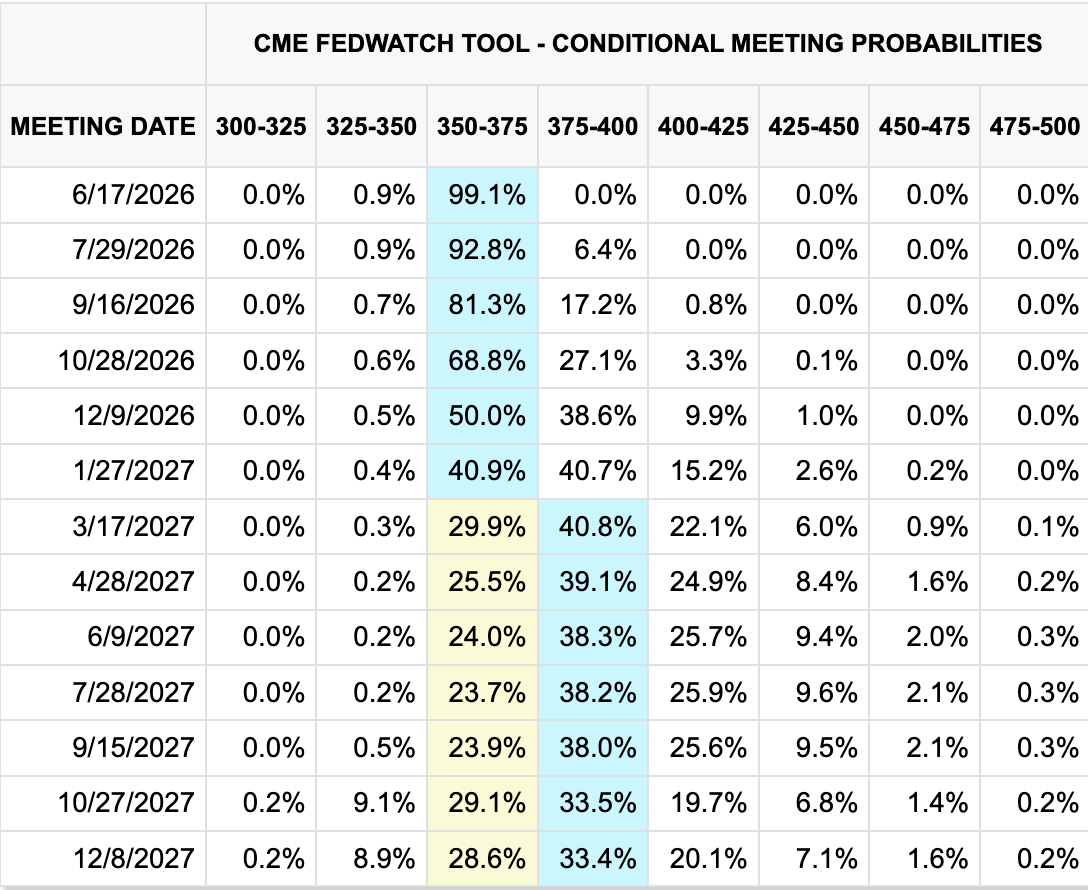
CME FedWatch now prices a 0 chance of rate cut in 2026, but 50% probability of a Fed rate hike by Dec 2026 — a fundamental reversal from the start of the year when markets expected multiple cuts.
This is the most structurally significant development in the macro landscape this week. The market is repricing the Fed from "when will they cut" to "will they hike?" For crypto: 2026 rate cut expectations are fully priced out; rising hike probability will continue to create systemic headwinds across all risk assets.
IV. Outlook for Next Week (May 19–25)
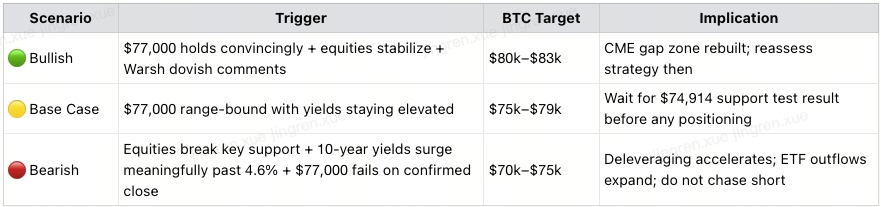
$77,000 is the battleground. Hold = consolidation. Break = deleveraging.
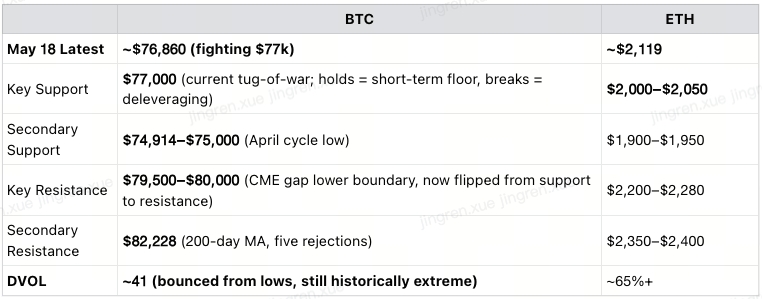
What the $77,000 tug-of-war means technically:
BTC touched $76,709 and bounced. The current price action at $77,000 contains two possible readings:
Bull read: Institutional buyers have real bids at $77,000; a short-term base is forming; rally target $79,500
Bear read: Weekend low liquidity is providing a temporary reprieve; when U.S. equity markets open, macro pressure may resume and this support won't hold
Neither reading can be confirmed yet. Volume confirmation during the Asia and Europe sessions is required.
Three Scenarios:
V. DVOL Update and Strategy Outlook
DVOL Current State: Bounced from Lows to ~41 — Still Historically Extreme
DVOL bounced from the 37–38 absolute floor and is now near 41. The critical framing: 41 is not "recovered to normal" — it is "slightly off an extreme bottom." The vol floor has lifted slightly, but the structural reading remains the same.
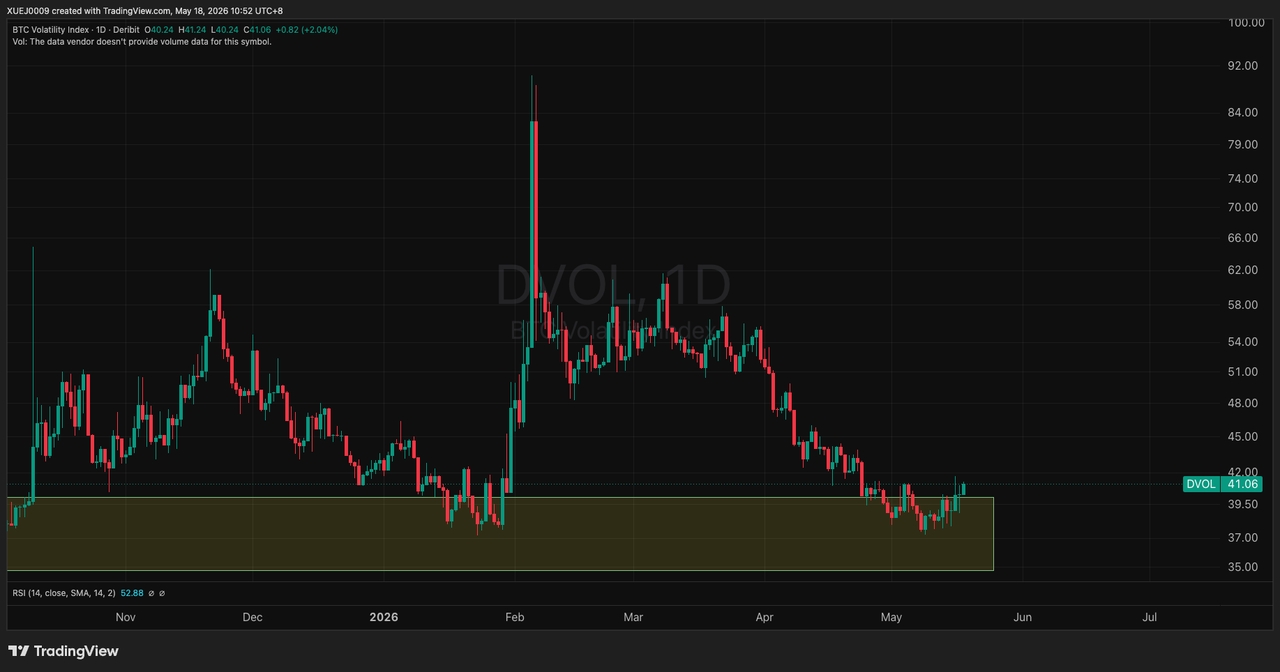
Two possible paths:

No strategy recommendation again this week. Reasons:
$77,000 outcome undetermined — positioning before direction confirms is speculation, not strategy
DVOL 41 still historically extreme — seller premium remains thin; buyer needs larger price move to profit
Macro backdrop unchanged — US10Y above 4.5%, rate hike odds at 50%+, equity positioning crowded; systemic risk not yet released
Triggers to reassess strategy (any one of these changes the calculus):

Weekly Summary:
"Don't FOMO" validated in full: BTC fell from $82,500 to $76,709 (−7.0%), now fighting $77,000. The 200-day MA rejected price for the 4th consecutive time; the rising wedge broke down cleanly.
CLARITY Act passed the Senate Banking Committee — and was fully absorbed by macro headwinds. BTC briefly touched $82,000 and reversed. Regulatory clarity is a long-term structural positive that cannot override rising yield pressure in the near term.
Equity "Long Liquidation Cascade" alert: Options expiry negative delta effect combined with long positioning at the 99th percentile created systemic forced selling. Equity stability is the prerequisite for ETF inflows — track S&P 500 and Nasdaq key support levels carefully.
US10Y breaks 4.5% warning line: The 2023 downtrend resistance has been touched. If yields persist above 4.5% or move toward 5%, risk assets face sustained turbulence.
CME FedWatch hike odds at 40%+: The Fed has been repriced from "when will they cut" to "will they hike?" — the most fundamental structural shift in the macro landscape this cycle.
DVOL at 41, bounced from lows but still historically extreme: This is not a return to normal. It is a slight lift from an all-time floor. Low vol precedes large moves — but the direction of that move is what the $77,000 battle will determine.
$77,000 is next week's most important observation. Hold = consolidation. Break = deleveraging. Until the outcome is clear, patience remains the correct position.